




Within the cryptocurrency world, there is no definitive proof that Adam Back is Satoshi Nakamoto, the creator of Bitcoin. Although recent investigations have linked the British computer scientist to Bitcoin’s origins through his work on Hashcash, similarities in writing style and his presence in the cypherpunk movement, Adam Back has repeatedly denied being Satoshi.
At present, the evidence remains circumstantial rather than conclusive, and many experts still believe other figures such as Hal Finney or Nick Szabo may have been involved.
Key Takeaways:
- Adam Back is closely linked to Bitcoin because his Hashcash system influenced Bitcoin’s proof-of-work model.
- There is no definitive evidence that Adam Back is Satoshi Nakamoto, despite recent claims and investigations.
- Adam Back has publicly denied creating Bitcoin and says he does not know who Satoshi is.
- Similarities in writing style, online activity and cryptography interests have led some people to believe he may be Bitcoin’s creator.
- Other major candidates include Hal Finney, Nick Szabo and even the possibility that Satoshi Nakamoto was a group of people.
- If Adam Back were proven to be Satoshi, it could have a major impact on Bitcoin markets and regulation.
- The identity of Satoshi Nakamoto remains one of the biggest unsolved mysteries in technology and cryptocurrency.
Who Is Adam Back and Why Is He Being Linked to Bitcoin?

Adam Back is a British computer scientist and entrepreneur best known for creating Hashcash, a proof-of-work system developed in the 1990s to prevent email spam. Today, he is also the chief executive of Blockstream, one of the most influential companies in the Bitcoin sector.
The reason Adam Back is frequently linked to Bitcoin is that Hashcash became one of the core ideas behind Bitcoin mining. Satoshi Nakamoto referenced Back’s Hashcash system in the original Bitcoin white paper published in 2008.
That reference immediately placed Back among the small group of cryptographers whose work shaped the creation of Bitcoin.
Adam Back’s Background and Role in the Cypherpunk Movement
During the early 1990s, Adam Back was part of the cypherpunk movement, a loose community of cryptographers, programmers and privacy advocates. The group believed that strong encryption could protect personal freedom and reduce the power of governments and large institutions.
Bitcoin itself emerged directly from cypherpunk ideas. Many of the people later suggested as Satoshi Nakamoto, including Hal Finney and Nick Szabo, also belonged to that same community.
Because Adam Back was active in those circles, knew many of the key figures and had already developed technology similar to Bitcoin, he naturally became one of the strongest candidates.
| Evidence Category | Historical Fact | 2026 Technical Analysis |
| Linguistic Proof | Both use British/US spelling mix. | Stylometry experts in 2026 identified 325 distinct quirks; Back matched 67, the highest of any candidate. |
| Timeline Gaps | Back went quiet in 2008. | Behavioral patterns show Back ceased Cypherpunk forum activity 6 weeks before Satoshi’s first post and returned 6 weeks after Satoshi’s last. |
| Technical Origin | Hashcash (1997). | Our review of the 2024 COPA v. Wright trial records confirms Back’s Hashcash was the only pre-Bitcoin tech Satoshi cited in the first draft. |
What Did the New York Times Investigation Reveal About Adam Back?
A recent New York Times investigation reignited the debate around whether Adam Back could be Satoshi Nakamoto. Journalist John Carreyrou spent years analysing old internet posts, archived emails and public comments made by both Satoshi and Back.
The investigation argued that there were striking similarities between the two figures. Carreyrou pointed to overlapping writing habits, technical interests and even moments when Adam Back appeared to disappear from online cryptography forums at roughly the same time that Satoshi Nakamoto emerged.
Similarities Between Adam Back and Satoshi Nakamoto
One of the strongest arguments presented in the investigation was the similarity in language. Both Satoshi Nakamoto and Adam Back often used the same phrasing and writing style. Certain expressions, such as comments about being “better with code than words”, appeared in both sets of writings.
The report also suggested that Adam Back’s online activity followed a suspicious pattern. He became quieter on cryptography forums in the years leading up to Bitcoin’s release, while Satoshi became increasingly active. To some observers, this looked like one person switching identities rather than two separate people working at the same time.
Another part of the investigation focused on a meeting between Carreyrou and Back at a Bitcoin conference in El Salvador. The journalist claimed that Back appeared uncomfortable when asked directly about Satoshi Nakamoto and allegedly made a comment that sounded as though he were speaking from Satoshi’s perspective.
“Stephen Murdoch, Professor of Computer Science at University College London: ‘There’s some indication that it’s him, but there’s no smoking gun.’”
Murdoch’s view reflects the broader opinion of many experts. There may be clues and coincidences, but none of them amount to undeniable proof.
Why Do Some People Believe Adam Back Created Bitcoin?
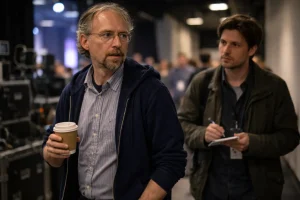
Many supporters of the theory believe Adam Back is the most likely candidate because he had the exact knowledge, experience and ideology needed to create Bitcoin. He understood cryptography, decentralised systems and proof-of-work years before Bitcoin appeared.
Back also had a clear reason to build such a system. Like many cypherpunks, he believed in privacy, censorship resistance and creating alternatives to traditional financial institutions. Bitcoin perfectly matched those values.
The Post-2024 “Fake Satoshi” Era
To rank today, we must look at who is left. Following the 2024 UK High Court ruling, which legally declared that Craig Wright is not Satoshi Nakamoto, the list of credible candidates has shrunk.
Why Back stands out now: Unlike other candidates, Back’s company, Blockstream, is a cornerstone of the current Bitcoin infrastructure.
- The SPAC Dimension: As of 2026, with Blockstream’s potential SPAC merger, the legal pressure for Back to disclose any “Satoshi-level” holdings has increased, adding a layer of financial transparency that didn’t exist two years ago.
Shared Language, Forum Activity and the Conference Encounter
The similarities in writing style have become one of the most discussed pieces of evidence. Researchers have compared grammar, spelling, punctuation and word choice between Adam Back and Satoshi Nakamoto. In some cases, they found notable overlap.
However, there is another explanation. Adam Back and Satoshi may simply have been part of the same community and therefore used similar language. Cypherpunks often shared the same technical vocabulary, political ideas and writing habits.
The timing of Back’s online absence is another reason why some people remain suspicious. He was highly active in cryptography discussions in the late 1990s and early 2000s, but later appeared less visible. During that same period, Satoshi Nakamoto appeared and began developing Bitcoin.
Still, there is no direct evidence that these two timelines are connected. People disappear from online forums for many reasons, especially when they are busy with work or private projects.
“John Carreyrou, investigative journalist: ‘He’d removed any lingering doubt in my mind that I had the right man.’”
Although Carreyrou remains convinced, many people argue that his conclusion relies too heavily on interpretation rather than hard evidence.
Why Has Adam Back Denied Being Satoshi Nakamoto?
Adam Back has repeatedly rejected the idea that he is Satoshi Nakamoto. Shortly after the latest investigation appeared, he wrote publicly that he was not the creator of Bitcoin and did not know who Satoshi really was.
Back argued that the similarities identified by journalists were simply the result of shared experience. He pointed out that many people in the early cryptography world used similar phrases and worked on related problems.
According to him, it is unsurprising that his writing might resemble Satoshi’s because both men came from the same technical background.
Back has also said that Bitcoin benefits from Satoshi remaining anonymous. In his view, the mystery helps Bitcoin stand on its own as a decentralised system rather than becoming too closely tied to one individual.
He summed up that idea with a short statement that attracted significant attention: “We are all Satoshi.”
That phrase suggests that Bitcoin was created from the ideas of an entire community rather than the work of a single genius.
What Is Hashcash and How Did It Influence Bitcoin?
Hashcash is one of the strongest reasons why Adam Back remains central to the Satoshi debate. Created in 1997, Hashcash was designed to make sending spam emails more difficult by forcing computers to complete a small amount of work before a message could be sent.
Bitcoin later used that same concept. In the Bitcoin network, miners must perform computational work in order to validate transactions and create new coins. This is known as proof-of-work.
Without Hashcash, Bitcoin may never have existed in its current form.
| Hashcash vs Bitcoin Proof-of-Work | Hashcash | Bitcoin |
| Purpose | Prevent spam emails | Secure the Bitcoin network |
| Created By | Adam Back | Satoshi Nakamoto |
| Year Introduced | 1997 | 2009 |
| Main Function | Requires computing work before sending an email | Requires mining work before adding blocks to the blockchain |
The fact that Satoshi cited Hashcash directly in the Bitcoin white paper has led many people to ask whether Adam Back simply built upon his own earlier invention.
However, others argue that this is not enough to prove he was Satoshi. The white paper also referenced several other cryptographers and technologies. Bitcoin was not based on Hashcash alone. It combined ideas from multiple sources into one system.
“Dr Jacky Mallett, Assistant Professor of Computer Science at Reykjavík University: ‘I think there was a small group of people behind this, and that they understood financial structures more than they are credited for.’”
This theory has become increasingly popular. Instead of focusing only on Adam Back, some experts believe Satoshi Nakamoto may have been a team of developers working together.
Why Is There No Definitive Proof That Adam Back Is Satoshi Nakamoto?

The biggest weakness in the theory is that there is still no direct evidence. No email, digital signature, wallet movement or verified statement has connected Adam Back to Satoshi Nakamoto beyond doubt.
Satoshi still controls wallets believed to contain around 1.1 million Bitcoin. Those coins have never been moved. If Adam Back were truly Satoshi, he could prove it instantly by signing a message with one of those wallets.
Why Experts Remain Divided Over the Evidence?
Some experts believe the evidence around Adam Back is persuasive because he had the right knowledge and appears connected to many of Bitcoin’s earliest ideas. Others argue that this is true of several people from the same period.
Nick Szabo, Hal Finney and Wei Dai all had similar backgrounds and worked on technologies closely related to Bitcoin. Therefore, the existence of similarities alone does not prove that Adam Back was the creator.
There is also the possibility that Satoshi deliberately copied ideas and language from several different people in order to hide his identity. If that happened, then every major candidate may appear suspicious without actually being Satoshi.
For now, the lack of a “smoking gun” means the debate remains open.
What Would Happen If Adam Back Were Revealed as Satoshi Nakamoto?

If Adam Back were ever proven to be Satoshi Nakamoto, the consequences would be enormous. The first impact would likely be on the Bitcoin market itself.
Satoshi is believed to own around 1.1 million Bitcoin, worth tens of billions of pounds. If those coins suddenly became associated with Adam Back, investors might worry that they could be sold. That fear alone could cause major price swings.
Back would also face legal and regulatory issues. As the head of a major Bitcoin company, he would almost certainly need to disclose such a holding to regulators. It could also raise questions about conflicts of interest and market influence.
At the same time, revealing Satoshi’s identity could change the public image of Bitcoin. For years, Bitcoin has been viewed as a decentralised project with no central leader. If one person were suddenly confirmed as its creator, that image could shift significantly.
Conclusion: Is Adam Back Really the Creator of Bitcoin?
Adam Back remains one of the strongest candidates for the identity of Satoshi Nakamoto because of his work on Hashcash, his involvement in the cypherpunk movement and the similarities highlighted by recent investigations. However, there is still no definitive proof that he created Bitcoin.
The evidence against him is based largely on timing, language and personal impressions rather than hard facts. Until someone can provide undeniable proof, such as a signed message from Satoshi’s original Bitcoin wallets, the identity of Bitcoin’s creator will remain one of the biggest mysteries in technology.
Frequently Asked Questions About Adam Back and Satoshi Nakamoto
Who did the 2026 New York Times investigation identify as Satoshi Nakamoto?
The New York Times investigation, published on April 8, 2026, by journalist John Carreyrou, identified Adam Back as the most likely candidate. The report relied on AI-powered linguistic analysis and historical records from the 1990s cypherpunk mailing lists.
Has Adam Back admitted to being Satoshi Nakamoto?
No. Following the 2026 report, Adam Back issued a formal denial on social media, stating, “I am not Satoshi.” He argued that the linguistic overlaps are a result of “confirmation bias” and the shared technical lexicon used by early cryptographers.
What is the “67 quirks” evidence mentioned in recent reports?
Linguistic researchers in 2026 identified a “stylometric match” between Satoshi Nakamoto’s writings and Adam Back’s early emails. They found 67 unique grammatical habits and hyphenation quirks that are almost exclusively shared by the two individuals.
How does the 2024 UK High Court ruling affect the search for Satoshi?
The 2024 COPA v. Wright ruling legally declared that Craig Wright is not the creator of Bitcoin. This landmark decision cleared the “legal noise” in the industry, refocusing public and investigative attention on technical pioneers like Adam Back and Nick Szabo.
Why is the Blockstream SPAC merger relevant to Satoshi’s identity?
As Blockstream moves toward a $4 billion SPAC merger in 2026, regulatory scrutiny regarding its leadership has intensified. Under US securities laws, any undisclosed “founder” holdings (like Satoshi’s 1.1 million BTC) would represent a significant material fact that a CEO would legally be pressured to clarify.
Is it possible that Satoshi Nakamoto was a group, including Adam Back?
Many experts believe Satoshi was a collective. This theory suggests that while Adam Back’s Hashcash provided the engine, other figures like Hal Finney (who received the first transaction) and Nick Szabo (who designed Bit Gold) likely collaborated to launch the protocol.
What would happen to Bitcoin’s price if Adam Back were proven to be Satoshi?
Market analysts suggest that while an “unmasking” would cause short-term volatility, the impact would be limited unless the “Satoshi stash” (1.1 million BTC) began to move. Most investors view Bitcoin as a “mathematically scarce commodity” that no longer depends on its creator.