


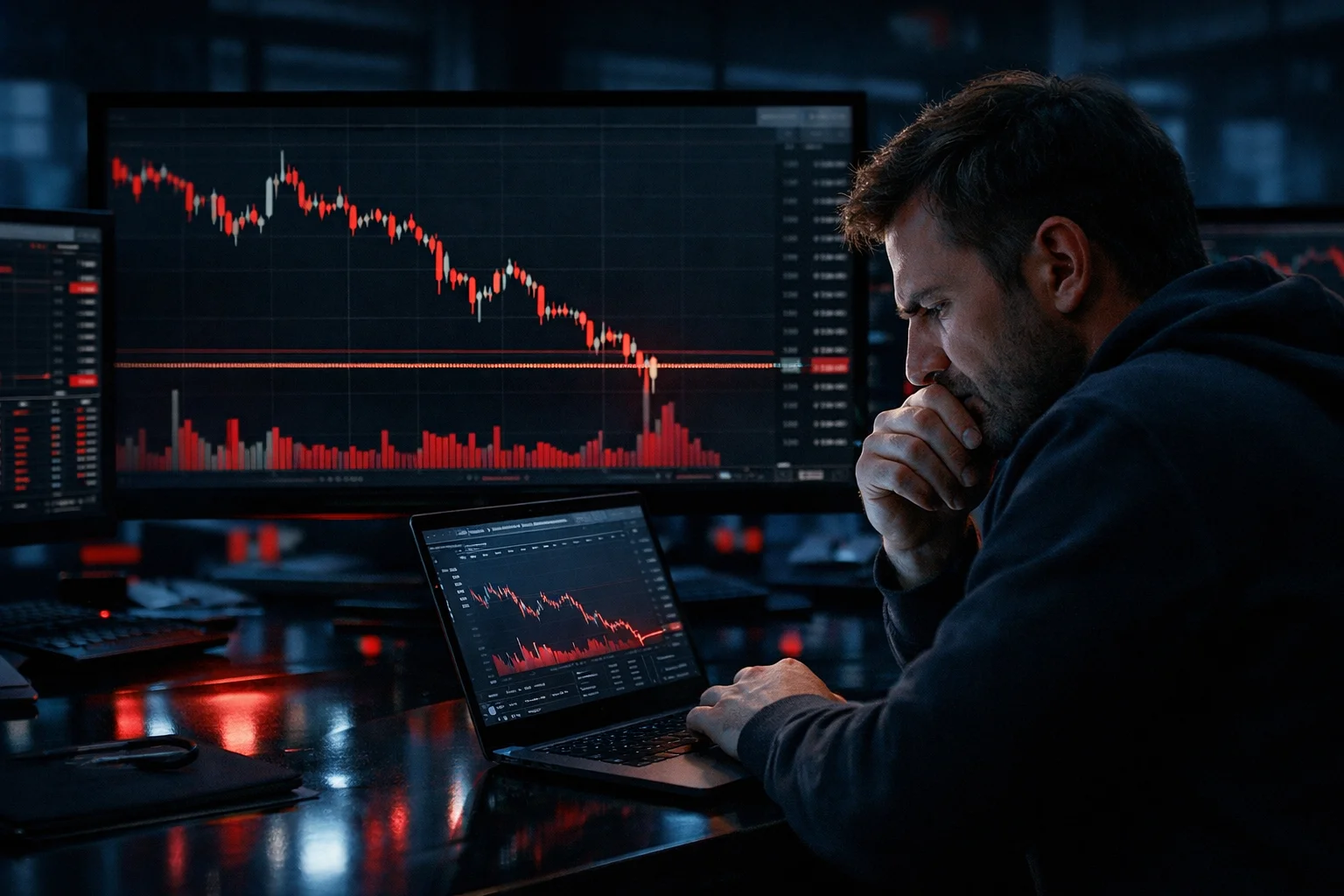
The XRP Binance Liquidity Index has reached a historic low of 0.062, signaling a total market freeze on the world’s largest exchange. Since January 2025, XRP’s 30-day trading volume on Binance has plummeted from over $200 billion to negligible levels.
Historically, such a drastic liquidity squeeze acts as a “coiled spring,” often followed by a 20-30% price expansion in either direction.
For UK-based traders, this structural shift suggests we are moving away from speculative day-trading toward a “supply shock” environment. With order books this thin, even a moderate influx of buy or sell orders can move the needle significantly.
Key Takeaways:
- The XRP Binance Liquidity Index has fallen to its lowest level since January 2025.
- XRP trading volume on Binance has dropped from over $200 billion to near-zero.
- Historically, extremely low liquidity has often preceded major XRP price swings.
- Analysts believe the current setup could either trigger a rally or reflect fading market interest.
- XRP remains supported near $1.34, with resistance between $1.38 and $1.42.
- XRP spot ETFs recorded their first net outflow month in March 2026.
- UK investors should expect higher volatility while monitoring liquidity, volume and support levels.
Why Has the XRP Binance Liquidity Index Dropped to Zero?

The XRP Binance Liquidity Index measures trading activity, order book depth and overall market participation for XRP on Binance. When the index approaches zero, it means there are very few buy and sell orders available and trading activity has slowed sharply.
Since January 2025, XRP’s 30-day Binance trading volume has collapsed from more than $200 billion to almost nothing. According to analyst Arthur, this decline began shortly after XRP’s strong rally in late 2025 lost momentum.
Once XRP failed to continue higher after reaching its July 2025 peak, many short-term traders began leaving the market.
Several factors caused the XRP Binance Liquidity Index to fall:
- Profit-taking after XRP’s 2025 rally reduced speculative interest.
- Traders shifted capital into Bitcoin and AI-related cryptocurrencies after Bitcoin dropped below $67,000 and broader market sentiment weakened.
- XRP spot ETFs recorded weaker demand and their first net outflows in March 2026, reducing institutional participation.
- Long-term XRP holders stopped selling and moved tokens away from Binance, leaving fewer coins available on the exchange.
As both trading demand and exchange supply declined at the same time, Binance order books became increasingly thin. Fewer traders were placing orders, while fewer holders were willing to sell.
| Period | XRP 30-Day Binance Volume | Main Reason for Decline | Liquidity Index Condition |
| January 2025 | Over $200 billion | Strong rally and heavy speculation | Very high |
| Mid-2025 | Around $80 billion | Profit-taking after XRP peak | Moderate |
| Early 2026 | Under $20 billion | Lower trader interest and ETF weakness | Weak |
| April 2026 | Near-zero | Very few sellers and fading market activity | Historic low |
The main trigger appears to have been the combination of fading trader enthusiasm and tighter XRP supply on Binance. After the excitement surrounding XRP’s rally faded, fewer people continued trading it.
At the same time, long-term holders appeared unwilling to sell near current prices because XRP remained more than 60% below its all-time high.
This created a rare situation where both buyers and sellers disappeared from the market. As a result, the XRP Binance Liquidity Index fell to its lowest level in years.
“The liquidity collapse began when speculative demand dried up after XRP’s rally stalled. Once traders left and long-term holders stopped selling, Binance was left with almost no meaningful XRP activity,” one digital asset analyst explained.
What Does a Near-Zero XRP Liquidity Index Actually Mean?
Liquidity refers to how easily an asset can be bought or sold without causing a major change in price. A highly liquid market usually has large trading volumes, many open orders and relatively stable price movement.
When the XRP Binance Liquidity Index approaches zero, it means there are very few active buy and sell orders available. As a result, even a small amount of buying or selling pressure can move the price sharply.
For example, if a major investor suddenly buys XRP while liquidity is low, there may not be enough sell orders available to absorb the purchase. This can cause the price to rise quickly. The opposite is also true. If a large holder sells XRP into a weak market, the lack of buyers may lead to a rapid decline.
Low liquidity also increases market risk. Traders may experience:
- Wider bid-ask spreads
- More volatile price swings
- Delays in executing orders
- Greater vulnerability to market manipulation
The XRP Binance Liquidity Index is therefore important because it provides an early warning that the market may be entering an unstable phase.
Could XRP’s Liquidity Collapse Trigger a Major Price Move?
Historically, periods of low XRP liquidity have often been followed by major price moves. This is because low liquidity creates a market environment where prices can move rapidly in either direction.
Historical Price Reactions After Low Liquidity Periods
Previous XRP cycles have shown that declining exchange activity can precede a breakout. During several periods between 2020 and 2024, XRP experienced long stretches of weak trading volume before suddenly moving by more than 30% within a short period.
When the market becomes quiet, traders often assume that little is happening. However, these low-volume phases can act as a coiled spring. Once sentiment changes or new buyers appear, the price may react much more strongly than expected.
The current XRP Binance Liquidity Index resembles those earlier periods. Analysts therefore believe that the present decline in Binance activity may be setting up the next significant move.
Why Low Exchange Supply Can Create a Sudden Breakout?
If long-term holders have removed XRP from Binance or are refusing to sell, the available exchange supply becomes limited. This creates a situation where even moderate demand can trigger a breakout.
Suppose institutional investors return to the market or positive XRP news emerges. With so little XRP available on Binance, buyers could compete for a shrinking number of tokens. This would likely drive the price sharply higher.
A similar effect has been seen in other cryptocurrencies when exchange balances decline. Reduced supply often magnifies price movement because there are fewer sellers available to absorb demand.
Risks of Sharp Downward Moves When Liquidity Disappears
Low liquidity does not always lead to higher prices. If trader interest continues to weaken, XRP could remain under pressure. Thin order books make the market more vulnerable to sudden declines because there are fewer buyers available to support the price.
Should XRP fall below key support levels, panic selling could increase. In a low-liquidity environment, that selling may have a greater effect than usual.
This is why the XRP Binance Liquidity Index should not be viewed as automatically bullish. It is a signal that volatility is increasing, but the direction remains uncertain.
Are XRP Holders Refusing to Sell on Binance?
One of the most discussed theories is that XRP holders are deliberately refusing to sell. According to Arthur’s analysis, long-term investors may be holding their tokens off-exchange while waiting for a larger price move.
This behaviour is common during periods when investors believe the market is undervaluing an asset. Rather than selling at current prices, holders may prefer to wait for stronger demand or a more positive market environment.
If this theory is correct, Binance now has very little XRP available for purchase. That could become important if demand suddenly returns.
The current market environment supports this possibility. XRP remains approximately 63% below its all-time high of $3.65 reached in July 2025. Some investors may believe that selling near $1.34 does not reflect XRP’s long-term potential.
What Are the XRP Price Levels Traders Should Watch Right Now?
The current XRP price structure remains highly important because low liquidity can make technical levels more influential than usual.
| XRP Level | Importance | Possible Outcome |
| $1.34 | Main support | Holding this level may support a recovery |
| $1.38 | First resistance | Break above may confirm stronger momentum |
| $1.42 | Higher resistance | Could open the way to further gains |
| $1.00 | Psychological support | A break below may increase fear |
| $0.83 | Bearish target | Some analysts see this as a possible reset zone |
| $1.80 | Bullish invalidation point | A close above could cancel the bearish outlook |
Support Level Near $1.34
Technical analysts from Alpha Crypto Signal identified a falling wedge breakout on XRP’s four-hour chart. According to their view, the breakout zone now acts as support around $1.34.
This level matters because XRP was trading near $1.34 when the liquidity collapse became more widely discussed. If buyers continue defending this area, confidence may improve.
Holding above support could also encourage short-term traders to enter the market again. In low-liquidity conditions, renewed buying activity could have a stronger-than-usual effect on price.
Potential Upside Targets Between $1.38 and $1.42
If XRP remains above $1.34, analysts believe the next upside targets are between $1.38 and $1.42. These levels have become important because they align with recent resistance zones.
A move through $1.38 could attract more momentum traders. If the price then reaches $1.42, the market may begin to reassess whether XRP is preparing for a larger rally.
However, the market still requires stronger volume before these targets can be reached confidently. Without fresh buying activity, XRP may struggle to maintain upward momentum.
How Does the Falling Wedge Breakout Affect XRP’s Outlook?

The falling wedge is generally considered a bullish chart pattern. It forms when price moves lower within narrowing boundaries before eventually breaking higher.
Alpha Crypto Signal believes XRP has already broken out from this pattern on the four-hour chart. The breakout area near $1.34 now serves as the key level that traders are watching.
If XRP remains above that level, confidence in the breakout could continue growing. A successful retest may increase the probability of a move towards $1.38 and $1.42.
However, low liquidity means the breakout still requires confirmation. Without stronger volume, the pattern may fail and leave XRP vulnerable to another decline.
Why Are XRP ETF Outflows Adding Pressure to the Market?
The XRP liquidity drought is occurring at the same time as weaker institutional demand. XRP spot ETFs, which launched in late 2025, recorded their first month of net outflows in March 2026.
According to SoSoValue, investors withdrew $31.16 million from XRP ETFs during the month. In addition, eight of the 22 trading days in March recorded zero inflows.
| ETF Metric – March 2026 | Value |
| Net ETF Outflows | $31.16 million |
| Trading Days With Zero Inflows | 8 |
| Total Trading Days | 22 |
| General Sentiment | Weakening institutional demand |
This matters because ETF flows are often seen as a sign of institutional confidence. If professional investors are reducing exposure to XRP, retail traders may become more cautious as well.
“ETF outflows do not always mean the long-term story has changed, but they often signal that institutions are waiting for stronger evidence before increasing exposure again,” a digital asset researcher explained.
Could XRP Still Rally Despite Weak Liquidity and ETF Outflows?
Despite the recent weakness, some analysts remain optimistic about XRP’s longer-term outlook. They argue that the current pattern resembles the period between 2020 and 2024.
Comparison With the 2020–2024 XRP Pattern
During the earlier cycle, XRP spent a long period moving lower while many traders lost interest. Yet after reaching a final low, the market eventually reversed sharply.
Some analysts believe the current structure looks very similar. They point to declining volume, weak sentiment and low liquidity as signs that the market may be nearing the end of another corrective phase.
Although this interpretation remains speculative, it helps explain why some investors are still accumulating XRP despite the recent decline.
Why Some Analysts Believe XRP Could Fall to $0.83 First?
Not all analysts expect an immediate recovery. Some believe XRP could fall further before beginning a new rally.
Their bearish scenario suggests that XRP may eventually decline towards $0.83. This level is viewed as an important long-term support zone.
A move to $0.83 could remove weaker holders from the market and create the conditions for a stronger rebound later. While such a drop would be painful, it would not necessarily end the long-term bullish thesis.
How a Longer-Term Move Towards $8.30 Could Develop?
The most optimistic forecast suggests that XRP could eventually rise towards $8.30 in a future cycle. Supporters of this view believe that once the current period of low liquidity ends, XRP could benefit from renewed institutional demand and stronger market sentiment.
However, that outcome would likely require several conditions to improve. Binance volume would need to recover, ETF inflows would need to return and XRP would need to break above major resistance levels.
What Does the XRP Binance Liquidity Index Mean for UK Investors?

For UK investors, the XRP Binance Liquidity Index is a warning that the market may become more volatile in the near future. While some traders may see opportunity in these conditions, others may prefer to remain cautious.
Low liquidity often increases both risk and reward. Prices can move sharply, but predicting the direction becomes more difficult. This is especially true when institutional demand is weakening and exchange activity is unusually low.
“Professional investors often reduce position sizes during periods of low liquidity because markets become harder to predict. Capital preservation matters more than chasing short-term moves,” one UK-based crypto adviser explained.
UK investors who continue to follow XRP should pay close attention to Binance trading volume, ETF flows and the key support level at $1.34. These factors may provide the clearest signals about where XRP could move next.
Is XRP Preparing for Its Next Major Move?
The XRP Binance Liquidity Index has reached a historic low, and that alone makes the current situation important. The market now appears caught between two possibilities.
The first is that long-term holders are refusing to sell, leaving Binance with limited XRP supply. If demand returns, the resulting price move could be significant.
The second is that trader interest has faded and the market is simply becoming less active. If that is true, XRP may continue to struggle.
Either way, history suggests that extremely low liquidity rarely lasts forever. A major move in XRP may now be closer than many traders realise.
Frequently Asked Questions
What is the XRP Binance Liquidity Index?
The XRP Binance Liquidity Index measures how much XRP trading activity and order book depth exists on Binance. A low reading suggests fewer buyers and sellers are active.
Why did XRP liquidity on Binance fall to zero?
Liquidity likely declined because either long-term holders stopped selling or overall trader interest faded significantly.
Does low liquidity always mean XRP will rise?
No. Low liquidity increases volatility, but the price can move either higher or lower depending on market sentiment.
What happens if XRP falls below $1.34?
A break below $1.34 could increase selling pressure and potentially open the way towards lower support levels.
Why are XRP ETF outflows important?
ETF outflows suggest institutional investors are becoming more cautious, which can weaken confidence in the wider market.
Could XRP still reach $8.30?
Some analysts believe XRP could eventually reach $8.30 in a future cycle, although this would require much stronger demand and market recovery.
Is XRP a good investment during low liquidity periods?
Low liquidity can create opportunities, but it also increases risk. Investors should be cautious and avoid taking oversized positions.