




Ethereum vs OSRS coal has become one of the most unexpected digital asset comparisons of 2026. While Ethereum remains one of the world’s largest cryptocurrencies, Old School RuneScape coal recorded stronger percentage growth between May 2025 and May 2026.
Ethereum increased by roughly 31.84%, whereas OSRS coal climbed approximately 42.65% based on Grand Exchange market tracking. The comparison highlights how virtual gaming economies can sometimes outperform mainstream blockchain assets when driven by strong player demand, utility, and consistent market activity.
2026 Performance Summary: A Digital Duality
While Ethereum is a pillar of the global decentralised finance ecosystem , its 31.84% growth was outpaced by a humble gaming resource. This disparity highlights a shift where practical utility in active virtual worlds can temporarily offer higher percentage returns than speculative blockchain assets.
| Metric | Ethereum (ETH) | OSRS Coal |
| Annual Growth (2025–2026) | Approx. 31.84% | Approx. 42.65% |
| Primary Value Driver | Network Adoption & DeFi | Gameplay Utility & Smithing |
| Market Stability | High Volatility | Predictable Gameplay Demand |
Key Takeaways:
| Factor | Ethereum | OSRS Coal |
| Annual Growth (2025–2026) | Approx. 31.84% | Approx. 42.65% |
| Market Type | Cryptocurrency | In-game commodity |
| Main Demand Driver | Blockchain utility and investment | Smithing and Blast Furnace usage |
| Volatility Level | High | Moderate within game economy |
| Liquidity | Real-world tradable | Limited to in-game economy |
| Risk Type | Wallet loss and market crashes | Game policy and market dependency |
Why Did OSRS Coal Outperform Ethereum Between 2025 and 2026?
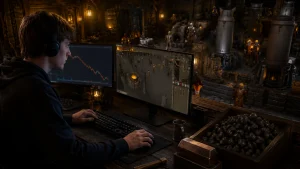
The comparison between Ethereum and OSRS coal initially appeared humorous to many online communities, but the numbers reveal a genuinely interesting market trend.
Ethereum continued to experience volatility throughout 2025 and early 2026 as crypto markets reacted to regulatory uncertainty, inflation concerns, and slower institutional expansion. Meanwhile, Old School RuneScape experienced a surge in active players, leading to significantly higher demand for essential resources such as coal.
Coal serves a fundamental purpose in the game economy. Players require substantial quantities for smithing progression, Blast Furnace training, and producing higher-tier metal bars. Unlike speculative meme items, coal possesses constant utility across multiple gameplay systems.
Comparing Ethereum and OSRS Coal Growth Rates
Data collected from cryptocurrency tracking platforms and the OSRS Grand Exchange tracker showed OSRS coal growing by more than 42%, overtaking Ethereum’s yearly growth figure. This was largely fuelled by increased game participation and consistent consumption of coal by players training production skills.
Ethereum, despite remaining one of the dominant blockchain ecosystems globally, struggled to maintain explosive growth after previous bullish cycles. Network competition, transaction fee concerns, and shifting investor sentiment all contributed to slower momentum.
| Asset | May 2025 Value Trend | May 2026 Value Trend | Approximate Growth |
| Ethereum | Stable recovery phase | Moderate increase | 31.84% |
| OSRS Coal | Strong demand increase | Significant price rise | 42.65% |
The Data Sources Behind the Market Comparison
Ethereum prices were tracked using cryptocurrency market platforms such as CoinMarketCap, while OSRS coal prices were measured using the Old School RuneScape Grand Exchange database.
Although the comparison combines two completely different economic systems, both represent digital assets whose values are driven by supply and demand behaviour.
James Holloway, Digital Economy Analyst: “What makes the OSRS coal comparison fascinating is not the meme value, but the demonstration that utility-based digital goods can outperform speculative assets under the right economic conditions.”
How Much Did Ethereum and OSRS Coal Increase in Value?
Ethereum maintained respectable yearly growth, especially compared with many smaller cryptocurrencies that struggled throughout 2025. However, OSRS coal unexpectedly achieved a higher percentage increase due to a surge in player activity and in-game production demand.
Ethereum’s 2026 Market Performance
Ethereum continued to benefit from widespread blockchain adoption and decentralised finance applications. However, investors became increasingly cautious during 2026 as competing blockchain networks gained traction. Transaction scalability concerns and fluctuating gas fees also affected investor confidence.
Despite these challenges, Ethereum still remained one of the strongest-performing major cryptocurrencies. A 31.84% yearly increase would normally be considered highly impressive in traditional investment markets.
OSRS Coal Price Growth on the Grand Exchange
OSRS coal prices rose due to a straightforward economic principle: demand outpaced supply. Players returning for temporary game modes, including Leagues, dramatically increased resource consumption across the economy.
Coal remains one of the most heavily consumed resources in the game because players require it for steel, mithril, adamant, and rune bar production. Many players prefer purchasing coal rather than mining it themselves, creating continuous buying pressure on the Grand Exchange.
| Reason for Coal Demand | Impact on Market Price |
| Blast Furnace training | Increased bulk purchases |
| Rising player population | Greater overall consumption |
| Seasonal Leagues | Temporary spikes in demand |
| Smithing progression | Stable long-term demand |
| Time-saving convenience | More players purchasing resources |
What Makes OSRS Coal Valuable in Old School RuneScape?
Unlike many virtual items that rely on rarity alone, OSRS coal has practical utility. Its value comes from functionality rather than speculation.
The Importance of Coal in Smithing
Smithing progression in Old School RuneScape depends heavily on coal. Nearly every metal tier above iron requires large quantities of coal to create bars. As players advance towards higher Smithing levels, demand increases rapidly.
This constant utility creates a stable economic foundation. Players training efficiently often purchase thousands of coal units simultaneously, particularly when using the Blast Furnace minigame for faster progression.
Blast Furnace Demand and Resource Consumption
The Blast Furnace remains one of the most popular skilling activities in OSRS. Because it allows faster and cheaper bar production, players frequently buy massive quantities of coal to maximise efficiency.
This creates a recurring economic cycle:
- More players enter the game
- More players train Smithing
- Coal consumption increases
- Grand Exchange prices rise
Unlike cryptocurrency markets, where value may rely heavily on speculation, coal’s value is tied directly to gameplay necessity.
Why is the demand for OSRS Coal Rising So Quickly?
The growth of Old School RuneScape itself has become one of the main drivers behind coal appreciation. The game has experienced renewed popularity throughout 2025 and 2026.
Increasing Old School RuneScape Player Numbers
Old School RuneScape has consistently expanded its active player base thanks to regular updates, nostalgia-driven engagement, and seasonal game modes. Increased player activity naturally leads to greater demand for resources.
More players training skills means greater resource consumption across the entire economy. Coal benefits directly because it remains central to crafting and smithing systems.
The Economic Impact of Seasonal Leagues
Leagues events significantly influence OSRS market behaviour. These temporary competitive modes encourage players to progress rapidly, often leading to enormous spikes in material consumption.
During Leagues periods, many players purchase resources in bulk to maximise efficiency, causing rapid price inflation across commonly used materials such as coal.
Emily Carter, MMORPG Market Researcher: “OSRS demonstrates how player engagement alone can reshape an economy. Coal prices increased because the game’s activity level surged faster than supply generation.”
Can Virtual Gaming Commodities Be Considered Investments?

The idea of investing in gaming commodities may sound unusual, but virtual economies now mirror many principles found in real-world financial systems.
Understanding In-Game Asset Economies
Gaming economies rely on scarcity, utility, supply, and demand the same mechanisms that influence traditional markets. In OSRS, items gain value because players require them to progress efficiently.
Although players cannot officially cash out OSRS wealth due to game rules, market behaviour still resembles genuine economic activity. Players speculate on updates, buy resources in anticipation of demand spikes, and track market trends similarly to stock or crypto traders.
The Psychology Behind Digital Commodity Trading
Virtual economies benefit heavily from emotional attachment and community engagement. Players assign value to efficiency, status, and progression speed, creating natural demand for useful items.
Unlike many cryptocurrencies, coal’s utility remains straightforward and understandable. Players know exactly why they need it, which reduces purely speculative purchasing behaviour.
| Investment Characteristic | Ethereum | OSRS Coal |
| Utility Value | Blockchain operations | Smithing and crafting |
| Speculation Influence | Very high | Moderate |
| User Base | Investors and developers | Active gamers |
| Price Drivers | Market sentiment | Gameplay demand |
| Regulation Exposure | High | Low |
The Convergence of Virtual and Traditional Markets The stability of OSRS coal compared to Ethereum’s volatility is not merely a gaming quirk but a reflection of confidence-driven structures.
As digital analyst James Holloway notes, utility-based goods can outperform speculative ones when the economic conditions in this case, a surge in player engagement are optimal.
Unlike Ethereum, which must react to global regulatory announcements and macro-economic trends, coal’s value is insulated within the game’s mechanics, tied directly to the time-saving convenience sought by millions of players.
How Does Ethereum’s Volatility Compare to OSRS Coal Stability?
Volatility remains one of the defining characteristics of cryptocurrency markets. Ethereum prices can fluctuate dramatically within short periods based on external events.
Cryptocurrency Market Fluctuations
Ethereum reacts to numerous external pressures including:
- Regulatory announcements
- Institutional trading
- Macro-economic trends
- Technological developments
- Market sentiment
These factors create significant unpredictability for investors. Even strong long-term projects experience sharp corrections.
Predictability Within the RuneScape Economy
OSRS coal prices tend to move more predictably because demand is tied directly to gameplay mechanics. Players consistently require coal for progression, ensuring recurring market activity.
That does not mean coal is risk-free. Game updates, balancing changes, or player population declines could negatively affect prices. However, compared with crypto markets, OSRS resource pricing often appears surprisingly stable.
Is OSRS Coal a Safer Digital Asset Than Ethereum?
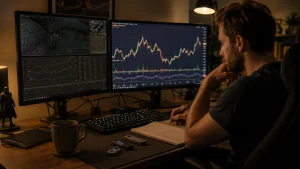
Comparing safety between Ethereum and OSRS coal depends entirely on context. Ethereum functions as a real-world financial asset, while coal exists within a controlled gaming ecosystem.
Risks Associated With Cryptocurrency Ownership
Cryptocurrency ownership involves multiple risks:
- Wallet security issues
- Exchange collapses
- Regulatory intervention
- Market crashes
- Lost private keys
Investors must actively manage security and storage solutions to protect assets.
Limitations of RuneScape Wealth Monetisation
OSRS coal presents a completely different challenge. While players can theoretically accumulate wealth, converting that wealth into real-world money violates game rules.
As a result, coal functions more as a virtual economic benchmark than a legitimate investment vehicle. Nevertheless, the comparison highlights how utility-based digital assets can outperform speculative blockchain assets during certain periods.
Could Gaming Economies Rival Cryptocurrency Markets in the Future?
Virtual gaming economies continue to evolve rapidly. Modern online games now support complex marketplaces involving millions of transactions daily.
The Growth of Virtual Economies
Games increasingly operate as self-contained economic ecosystems. Players trade resources, speculate on updates, and monitor item trends similarly to financial markets.
Some gaming economies already process enormous virtual wealth volumes, creating systems that resemble decentralised marketplaces.
Digital Ownership Beyond Blockchain
While blockchain technology focuses heavily on ownership and decentralisation, gaming economies have operated large-scale digital ownership systems for years without blockchain integration.
OSRS demonstrates that value can emerge simply from player trust, utility, and engagement rather than decentralised technology alone.
Daniel Reeves, Virtual Asset Consultant: “The OSRS economy works because players consistently trust the usefulness of items. In many ways, that mirrors the confidence-driven structure seen in cryptocurrency markets.”
Could Ethereum Recover Its Competitive Edge Against Gaming Assets?

Despite the surprising comparison, Ethereum remains one of the most important digital assets globally. Short-term percentage comparisons do not necessarily indicate long-term superiority.
Ethereum Scalability and Adoption Challenges
Ethereum continues to face challenges involving scalability, transaction efficiency, and network congestion. Competing blockchain platforms have introduced faster alternatives, increasing market pressure.
However, Ethereum still maintains strong developer activity, extensive decentralised finance integration, and significant institutional recognition.
Future Developments in the Crypto Market
Future Ethereum upgrades could strengthen market confidence and restore stronger growth momentum. Broader cryptocurrency adoption also remains possible if regulatory clarity improves internationally.
OSRS coal’s performance reflects a niche gaming economy trend rather than a complete replacement for cryptocurrency investing.
What Does This Comparison Reveal About Digital Economies?
The comparison between Ethereum and OSRS coal highlights how digital value increasingly exists beyond traditional finance.
Entertainment Economies Versus Financial Economies
Entertainment-based economies now generate substantial economic activity. Online games create environments where digital resources carry measurable value because users assign importance to them.
This blurs the distinction between gaming economies and broader digital financial systems.
Long-Term Sustainability of Virtual Assets
Sustainability depends on community engagement. Ethereum depends on blockchain adoption and developer ecosystems, while OSRS coal depends on active players continuing to consume resources.
Both systems ultimately rely on user confidence and participation.
Navigating the Digital Asset Landscape
It is essential to distinguish between these two assets. Ethereum remains a legitimate, real-world financial vehicle with high liquidity and institutional recognition.
Conversely, while OSRS coal shows impressive market behavior, it exists within a controlled ecosystem where monetisation is restricted by game rules. Therefore, the coal comparison serves as a benchmark for how player-driven demand can reshape value faster than supply generation can keep up
Conclusion
The Ethereum vs OSRS coal comparison may have started as an amusing internet observation, but it highlights a deeper reality about digital economies in 2026. OSRS coal outperformed Ethereum in yearly growth because of consistent in-game utility, growing player demand, and a thriving virtual economy.
While Ethereum remains a major blockchain asset with long-term potential, the rise of gaming commodities demonstrates that digital value can emerge from entertainment ecosystems just as effectively as financial technology. Ultimately, both markets reveal how demand, utility, and community engagement continue shaping the future of digital assets.
FAQs
Why did OSRS coal outperform Ethereum in 2026?
OSRS coal outperformed Ethereum largely because of increased player demand within Old School RuneScape. More players participating in smithing activities and Leagues events caused coal prices to rise rapidly throughout the year.
Is OSRS coal a real investment asset?
OSRS coal is not officially considered a real-world investment asset because it exists entirely within a game economy. However, its market behaviour demonstrates many principles found in traditional financial markets.
How is OSRS coal traded in the game?
Players trade coal through the Grand Exchange, which acts as OSRS’s central marketplace. Prices fluctuate depending on player demand, resource availability, and gameplay trends.
Why is coal important in Old School RuneScape?
Coal is essential for smithing higher-tier metal bars and equipment. Since players require large quantities for skill progression, demand remains consistently strong across the game economy.
Can gaming economies affect real-world financial trends?
Gaming economies increasingly influence discussions around digital ownership, virtual marketplaces, and online asset valuation. While separate from traditional finance, they reflect similar economic behaviours.
Is Ethereum still a good investment despite lower growth?
Many investors still view Ethereum as one of the strongest cryptocurrencies due to its widespread adoption and blockchain utility. Short-term underperformance does not eliminate its long-term relevance.
What risks exist with virtual gaming assets?
Virtual gaming assets depend heavily on the popularity and stability of the game itself. Developer updates, rule changes, or declining player numbers can significantly impact item values.