


The XRP Binance Liquidity Index has reached a historic low of 0.062, signaling a total market freeze on the world’s largest exchange. Since January 2025, XRP’s 30-day trading volume on Binance has plummeted from over $200 billion to negligible levels. Historically, such a drastic liquidity squeeze acts as a “coiled spring,” often followed by a 20-30% price expansion in either direction. For UK-based traders, this structural shift suggests we are moving away from speculative day-trading toward a “supply shock” environment. With order books this thin, even a moderate influx of buy or sell orders can move the needle significantly. Key Takeaways: The XRP Binance Liquidity Index has fallen to its lowest level since January 2025. XRP trading volume on Binance has dropped from over $200 billion to near-zero. Historically, extremely low liquidity has often preceded major XRP price swings. Analysts believe the current setup could either trigger a rally or reflect fading market interest. XRP remains supported near $1.34, with resistance between $1.38 and $1.42. XRP spot ETFs recorded their first net outflow month in March 2026. UK investors should expect higher volatility while monitoring liquidity, volume and support levels. Why Has the XRP Binance Liquidity Index Dropped to Zero? The XRP Binance Liquidity Index measures trading activity, order book depth and overall market participation for XRP on Binance. When the index approaches zero, it means there are very few buy and sell orders available and trading activity has slowed sharply. Since January 2025, XRP’s 30-day Binance trading volume has collapsed from more than $200 billion to almost nothing. According to analyst Arthur, this decline began shortly after XRP’s strong rally in late 2025 lost momentum. Once XRP failed to continue higher after reaching its July 2025 peak, many short-term traders began leaving the market. Several factors caused the XRP Binance Liquidity Index to fall: Profit-taking after XRP’s 2025 rally reduced speculative interest. Traders shifted capital into Bitcoin and AI-related cryptocurrencies after Bitcoin dropped below $67,000 and broader market sentiment weakened. XRP spot ETFs recorded weaker demand and their first net outflows in March 2026, reducing institutional participation. Long-term XRP holders stopped selling and moved tokens away from Binance, leaving fewer coins available on the exchange. As both trading demand and exchange supply declined at the same time, Binance order books became increasingly thin. Fewer traders were placing orders, while fewer holders were willing to sell. Period XRP 30-Day Binance Volume Main Reason for Decline Liquidity Index Condition January 2025 Over $200 billion Strong rally and heavy speculation Very high Mid-2025 Around $80 billion Profit-taking after XRP peak Moderate Early 2026 Under $20 billion Lower trader interest and ETF weakness Weak April 2026 Near-zero Very few sellers and fading market activity Historic low The main trigger appears to have been the combination of fading trader enthusiasm and tighter XRP supply on Binance. After the excitement surrounding XRP’s rally faded, fewer people continued trading it. At the same time, long-term holders appeared unwilling to sell near current prices because XRP remained more than 60% below its all-time high. This created a rare situation where both buyers and sellers disappeared from the market. As a result, the XRP Binance Liquidity Index fell to its lowest level in years. “The liquidity collapse began when speculative demand dried up after XRP’s rally stalled. Once traders left and long-term holders stopped selling, Binance was left with almost no meaningful XRP activity,” one digital asset analyst explained. What Does a Near-Zero XRP Liquidity Index Actually Mean? Liquidity refers to how easily an asset can be bought or sold without causing a major change in price. A highly liquid market usually has large trading volumes, many open orders and relatively stable price movement. When the XRP Binance Liquidity Index approaches zero, it means there are very few active buy and sell orders available. As a result, even a small amount of buying or selling pressure can move the price sharply. For example, if a major investor suddenly buys XRP while liquidity is low, there may not be enough sell orders available to absorb the purchase. This can cause the price to rise quickly. The opposite is also true. If a large holder sells XRP into a weak market, the lack of buyers may lead to a rapid decline. Low liquidity also increases market risk. Traders may experience: Wider bid-ask spreads More volatile price swings Delays in executing orders Greater vulnerability to market manipulation The XRP Binance Liquidity Index is therefore important because it provides an early warning that the market may be entering an unstable phase. Could XRP’s Liquidity Collapse Trigger a Major Price Move? Historically, periods of low XRP liquidity have often been followed by major price moves. This is because low liquidity creates a market environment where prices can move rapidly in either direction. Historical Price Reactions After Low Liquidity Periods Previous XRP cycles have shown that declining exchange activity can precede a breakout. During several periods between 2020 and 2024, XRP experienced long stretches of weak trading volume before suddenly moving by more than 30% within a short period. When the market becomes quiet, traders often assume that little is happening. However, these low-volume phases can act as a coiled spring. Once sentiment changes or new buyers appear, the price may react much more strongly than expected. The current XRP Binance Liquidity Index resembles those earlier periods. Analysts therefore believe that the present decline in Binance activity may be setting up the next significant move. Why Low Exchange Supply Can Create a Sudden Breakout? If long-term holders have removed XRP from Binance or are refusing to sell, the available exchange supply becomes limited. This creates a situation where even moderate demand can trigger a breakout. Suppose institutional investors return to the market or positive XRP news emerges. With so little XRP available on Binance, buyers could compete for a shrinking number of tokens. This would likely drive the price sharply higher. A similar effect has been seen in other cryptocurrencies when exchange balances
How to Move Crypto From Coinbase to Wallet?
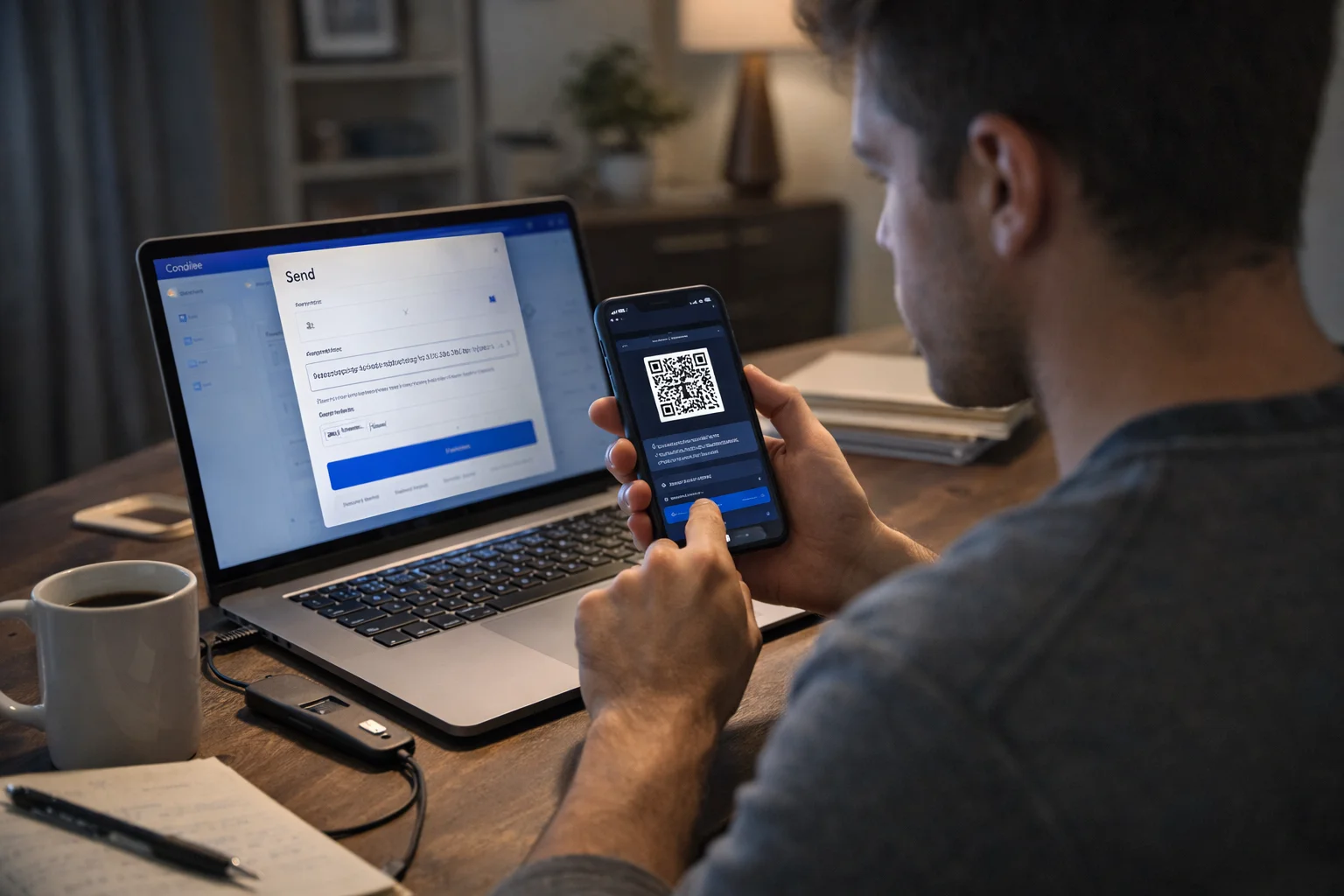
Moving crypto from Coinbase to a wallet involves copying the receiving wallet address, opening Coinbase, selecting “Send & Receive”, choosing the cryptocurrency, and pasting the wallet address before confirming the transaction. If the user is transferring to Coinbase Wallet, they can connect both accounts directly through Coinbase Pay. Before sending, it is important to choose the correct blockchain network, check the wallet supports the asset, and review any network fees. Once confirmed, the transfer is completed after the blockchain verifies the transaction. Key Takeaways: Coinbase allows users to send cryptocurrency to external wallets, Coinbase Wallet and the Base app. The correct wallet address and blockchain network must always be selected. Coinbase itself does not usually charge a withdrawal fee, but blockchain network fees still apply. Transfers to Coinbase Wallet can be completed directly by linking both accounts. Crypto transfers cannot normally be reversed once sent. Delays may happen if Coinbase requires additional identity verification. What Is the Difference Between Coinbase, Coinbase Wallet and the Base App? Feature Coinbase Account Coinbase Wallet Base App Main Purpose Buy and sell crypto Store crypto independently Use the Base network Controls Private Keys Coinbase User User Can Receive Crypto Yes Yes Yes Best For Beginners Long-term storage Base ecosystem users Many people confuse Coinbase, Coinbase Wallet and the Base app because all three can be linked together. However, they serve different purposes. Coinbase is an exchange where cryptocurrency can be bought, sold and stored. Coinbase Wallet is a self-custody wallet that gives the owner full control over private keys. The Base app is used to interact with the Base network and move assets between connected accounts. Coinbase Exchange Account A Coinbase account is an exchange account where users can purchase cryptocurrency using a bank card or bank transfer. The exchange stores the cryptocurrency on behalf of the user, which means Coinbase controls the private keys. This setup is convenient for beginners because there is no need to manage wallet recovery phrases or private keys. However, many investors eventually choose to move their assets to a separate wallet for more control and security. Coinbase Wallet as a Self-Custody Wallet Coinbase Wallet is separate from the Coinbase exchange account. It is a self-custody wallet, which means the owner controls the recovery phrase and private keys. Nobody else, including Coinbase, can access the wallet. This wallet is often used for storing cryptocurrency more securely, connecting to decentralised finance platforms and holding NFTs. It can also be linked directly to a Coinbase account, making transfers easier. Base App and How It Connects With Coinbase? The Base app allows users to move cryptocurrency between Coinbase and the Base network. It can be linked directly to a Coinbase account, allowing transfers without manually copying wallet addresses. The app is especially useful for users who want to access decentralised applications on Base. However, network fees may still apply when moving assets. How Can Someone Transfer Crypto From Coinbase to an External Wallet? To move crypto from Coinbase to an external wallet, the user needs the receiving wallet address and access to the Coinbase account. The process only takes a few minutes, but accuracy is essential because blockchain transfers cannot usually be undone. Copy the Correct Wallet Address and Sign In to Coinbase The first step is to open the external wallet and copy its receiving address. Each cryptocurrency has a different address format. For example, a Bitcoin address is different from an Ethereum address. After copying the address, the user should log in to Coinbase and make sure the account is fully verified. If the wrong address is copied, the cryptocurrency could be permanently lost. Use the ‘Send & Receive’ Option Inside Coinbase, the user should click the “Send & Receive” button. A new window will appear asking which cryptocurrency should be sent. The user then selects the correct asset, such as Bitcoin, Ethereum or USDC. After selecting the asset, Coinbase asks for the destination wallet address. Paste the Wallet Address and Confirm the Transfer The wallet address should be pasted into the destination field. Before confirming, the user should review the amount, network and wallet address carefully. A blockchain specialist described this issue clearly: “The majority of failed crypto transfers happen because people rush the process. Taking an extra minute to verify the address and network can prevent a permanent loss.” Once everything looks correct, Coinbase will display the transaction fee and ask for confirmation. The transfer is then processed by the blockchain. Step Action Required Important Check 1 Copy wallet address Ensure it matches the cryptocurrency 2 Open Coinbase and choose Send Select the correct coin 3 Paste address and confirm Double-check the network How Can Someone Move Crypto From Coinbase to Coinbase Wallet? Moving cryptocurrency from Coinbase to Coinbase Wallet is easier than sending to an external wallet because both accounts can be connected. Sign In to Coinbase Wallet and Select ‘Receive’ The user should first open Coinbase Wallet and sign in. From the main screen, there is a “Receive” button that allows the wallet to receive crypto. After selecting “Receive”, the wallet provides several methods to add funds. One of the easiest options is “Add crypto with Coinbase Pay”. Choose Coinbase Pay and Link the Coinbase Account After selecting Coinbase Pay, the user is asked to sign in to the Coinbase exchange account. Coinbase then requests permission to link both accounts together. Once linked, the user can choose which cryptocurrency to move. This avoids manually copying and pasting addresses, reducing the risk of mistakes. Transfer Cryptocurrency Directly From Coinbase The selected cryptocurrency can then be transferred directly into Coinbase Wallet. The user simply enters the amount and confirms the transaction. A crypto adviser explained it this way: “People often assume Coinbase Wallet and Coinbase are the same thing, but they are not. Linking them is useful because it creates a faster and safer transfer process without relying on copied wallet addresses.” The transfer is normally completed within a few minutes, although some cryptocurrencies may take longer

Is Ethereum a Good Investment in 2026? Price Trends & Risks
Yes, Ethereum could be a good investment in 2026 for investors who can tolerate volatility and are looking for long-term growth rather than quick profits. Ethereum remains the leading blockchain for smart contracts, decentralised finance and tokenised assets. Although ETH has fallen significantly from its 2025 highs, strong developer activity, rising institutional adoption and growing ETF inflows suggest that Ethereum still has solid long-term potential. However, investors must also consider risks such as regulation, market swings and increasing competition from Solana and other blockchains. Disclaimer: “Don’t invest unless you’re prepared to lose all the money you invest. This is a high-risk investment and you are unlikely to be protected if something goes wrong. Take 2 mins to learn more”. Key Takeaways: Ethereum remains the largest smart contract blockchain in 2026. ETH has dropped sharply from its 2025 peak, but network activity remains strong. Institutional demand is increasing due to Ethereum ETFs and staking products. Ethereum could benefit from lower supply thanks to staking and ETH burning. Solana, Avalanche and regulation remain major risks for Ethereum investors. Ethereum may suit long-term UK investors better than short-term traders. Diversification is still important, even if Ethereum appears attractive. Current 2026 Risks: New FCA cooling-off periods for UK buyers, rising competition from Solana/Avalanche, and the sensitivity of ETH ETFs to network utility data.Current Market Position (April 2026) As of today, April 6, 2026, Ethereum (ETH) is trading at approximately £1,605.95 ($2,010.40). The market has shown a 3.01% recovery over the last 24 hours, signaling a potential breakout from the consolidation phase seen throughout Q1. Metric April 2026 Status Context Current Price £1,605.95 Up from March lows of £1,558. Network Staking ~30.4% Over 36M ETH is now locked, reducing liquid supply. ETF Activity Net Outflows (Q1) January saw significant exits, but April flows are stabilizing. Transaction Speed 1,000+ TPS Improving toward the 10,000 TPS goal. What Makes Ethereum a Good Investment in 2026? Ethereum continues to attract investors because it is more than just a cryptocurrency. Unlike Bitcoin, which is often viewed as digital gold, Ethereum powers thousands of decentralised applications, financial services and blockchain projects. The keyword “is Ethereum a good investment” has become more popular in 2026 because ETH prices remain below their all-time highs while the network itself continues to grow. Many investors believe this creates an opportunity to buy Ethereum before another potential rally. Why Investors Continue to Choose Ethereum? Ethereum remains the dominant blockchain in several areas: Decentralised finance (DeFi) Non-fungible tokens (NFTs) Stablecoins Tokenised real-world assets Smart contracts The Ethereum network still has the largest number of developers, decentralised apps and institutional users. This gives it a stronger foundation than many competing cryptocurrencies. How Ethereum Differs from Other Cryptocurrencies? Most cryptocurrencies are designed mainly for payments or speculation. Ethereum is different because it acts as an entire platform for blockchain technology. For example: Cryptocurrency Main Purpose Key Strength Bitcoin Store of value Scarcity Ethereum Smart contracts and apps Utility Solana Fast transactions Speed Avalanche Enterprise blockchain Scalability Because Ethereum has more real-world use cases, many investors believe it has stronger long-term growth potential than smaller cryptocurrencies. What Is Ethereum and How Does It Work? Ethereum is a decentralised blockchain launched in 2015. It allows developers to create applications that operate without banks, governments or technology companies controlling them. The Ethereum network runs using smart contracts. These are digital agreements that automatically execute once certain conditions are met. For example, a smart contract could: Send payment automatically when goods arrive Allow users to trade cryptocurrencies without a bank Create and transfer digital art or NFTs Power decentralised lending and borrowing Ethereum uses its own cryptocurrency, called Ether (ETH), to pay transaction fees and power the network. Today, Ethereum supports much of the Web3 economy. It is the blockchain behind many of the largest crypto exchanges, DeFi platforms and NFT marketplaces. Why Is Ethereum Different from Bitcoin? Ethereum and Bitcoin are often compared because they are the two largest cryptocurrencies. However, they serve different purposes. Store of Value vs Programmable Blockchain Bitcoin was created mainly as a digital alternative to money. Its supply is limited to 21 million coins, which makes it attractive to investors seeking scarcity. Ethereum, on the other hand, is designed to be programmable. It allows developers to build applications directly on the blockchain. Bitcoin is usually seen as: Digital gold A hedge against inflation A long-term store of value Ethereum is usually seen as: A technology investment The foundation of decentralised finance A way to gain exposure to blockchain innovation Utility, Scarcity and Long-Term Value Ethereum may have more long-term upside because its value depends on how much people use the network. If more companies, investors and developers use Ethereum, the demand for ETH could rise. Bitcoin depends mainly on investor demand. Ethereum benefits from both investor demand and practical usage. This means Ethereum may be riskier than Bitcoin, but it may also offer greater growth potential. How Has Ethereum Performed in 2026 So Far? Ethereum has experienced a difficult start to 2026. ETH remains far below its 2025 peak after a major correction in the crypto market. During 2025, Ethereum traded above £3,500 in some periods. By early 2026, ETH had fallen closer to £1,600 to £2,000. Despite this price decline, Ethereum’s network activity has remained strong. More people are staking ETH, developers continue building on Ethereum and ETF demand has increased. The price decline shows that market sentiment and macroeconomic conditions can have a major effect on Ethereum in the short term. However, long-term investors often view falling prices as a potential buying opportunity when the fundamentals remain positive. What Do Historical Ethereum Price Trends Show? Ethereum has always been a volatile investment. Since launch, ETH has experienced multiple crashes followed by strong recoveries. Year Lowest ETH Price Highest ETH Price Major Event 2016 £0.60 £11 Early Ethereum adoption 2017 £6 £1,000+ Crypto bull market 2018 £70 £1,000 Major crash after peak 2021 £540 £3,500+ NFT and DeFi boom 2022 £700 £2,800 Crypto bear

Is XRP a Good Investment in 2026? Risks, Potential, and What Investors Should Know
UK Investor Alert: April 2026 Update Is XRP a good investment in 2026, or is it a high-risk asset that could stall your portfolio? As of April 2026, XRP has moved beyond its historical legal hurdles to become a primary focus for UK institutional fintech. However, with 2026 market volatility affecting riskier assets , you must distinguish between “hype” and “utility” before investing. Quick Decision Matrix: Invest if: You have a 5-year outlook and existing low-risk savings. Avoid if: You are relying on this money for rent, mortgage, or immediate retirement needs What Is XRP and Why Are Investors Still Interested in It? XRP is the digital asset used on the XRP Ledger, a blockchain network created to make international payments faster and cheaper. Unlike Bitcoin, which is often treated as digital gold, XRP was designed to help banks and payment companies move money between countries more efficiently. Traditional international payments can take several days and often involve high fees. XRP aims to reduce that delay to a few seconds. Investors remain interested in XRP because: It has a practical use case Ripple, the company associated with XRP, continues to build banking partnerships Legal concerns in the United States have eased compared with previous years Some investors believe wider adoption could increase XRP’s value XRP can settle transactions in three to five seconds and at very low cost, which is why many supporters believe it still has long-term potential. 2026 Institutional Snapshot: In January 2026, Ripple secured a major regulatory milestone by obtaining the Electronic Money Institution (EMI) license from both the UK’s Financial Conduct Authority (FCA) and Luxembourg’s CSSF. This expanded Ripple’s regulated footprint to over 75 licenses globally. According to a KuCoin 2026 Report, banking integrations in regions like Turkey have seen user growth surge from 14,000 to over 1 million users in less than two years, specifically utilizing XRP for institutional custody. How Does XRP Compare With Bitcoin and Ethereum as an Investment? Feature XRP Bitcoin Ethereum Main Purpose Cross-border payments Store of value Smart contracts and apps Settlement Speed 3–5 seconds 10–60 minutes 15 seconds to several minutes UK Context Rivals UK Faster Payments “Digital Gold” for UK high-net-worth investors Backbone of many UK DeFi applications Primary Risk Adoption uncertainty Slower growth High fees and competition Compared with Bitcoin and Ethereum, XRP offers a different type of investment opportunity. Bitcoin is generally seen as the safest cryptocurrency because it has the largest market and the strongest reputation. Ethereum appeals to investors who want exposure to blockchain technology and decentralised applications. XRP may have greater upside potential than Bitcoin because it is still more closely linked to future adoption and regulatory progress. If banks and payment firms begin using XRP more widely, its value could increase faster than Bitcoin or Ethereum. However, that also makes XRP riskier. Bitcoin does not depend on a company or banking partnerships, while Ethereum already has a large technology ecosystem. XRP’s future depends much more heavily on whether real-world adoption actually happens. Is XRP a Good Investment for UK Investors in 2026? The short answer is: possibly, but only if you understand the risks. If you are looking for a stable, predictable investment, XRP is unlikely to be the right choice. It can rise sharply, but it can also fall very quickly. Even in early 2026, XRP experienced a significant decline after investors moved away from riskier assets. However, if you are comfortable with volatility and only invest money that you can afford to lose, XRP may deserve a small place in a diversified portfolio. For UK investors, XRP could make sense if: You already have savings and lower-risk investments You want a small amount of exposure to cryptocurrency You understand that prices can move dramatically You are investing for at least four or five years XRP is generally not suitable if: You need short-term certainty You are relying on the money for your mortgage, rent or retirement You are new to investing and uncomfortable with large price swings Most analysts suggest that XRP should only represent a small percentage of your overall investments rather than your entire portfolio. What Factors Could Increase the Value of XRP? Several developments could help XRP increase in value during 2026 and beyond. Growing Use in Cross-Border Payments XRP’s strongest argument is that it solves a real problem. If more banks and financial companies begin using XRP for international transfers, demand could rise. Supporters often point to the possibility that XRP could become a common bridge asset for international payments. If even a small share of the global cross-border payments market moved onto XRP, the effect on price could be significant. Greater Institutional Adoption Institutional investors appear more interested in XRP than they were a few years ago. New XRP-focused financial products and possible exchange-traded funds have increased attention from larger investors. There are also signs that institutional investment products linked to XRP are becoming more common. This could make it easier for pension funds and wealth managers to invest in XRP. Regulatory Clarity For years, one of the biggest concerns surrounding XRP was the legal dispute between Ripple and the US Securities and Exchange Commission. That uncertainty has reduced. Courts have already ruled that XRP itself is not generally considered a security when traded on public exchanges, although some of Ripple’s institutional sales created separate legal problems. Analyst Insight: The 2026 Institutional Shift “In my years tracking UK fintech, the biggest shift for XRP in 2026 isn’t the price, it’s the plumbing. While Bitcoin is a ‘store of value’ , XRP is designed for high-speed bank settlement. For UK investors, the ‘Bull Case’ depends entirely on whether Ripple’s 2026 banking partnerships translate into actual token demand rather than just technology use .” – Senior Analyst, London Crypto Research Clearer rules could make investors more confident and encourage wider adoption. What Are the Biggest Risks of Investing in XRP? While there are reasons to be optimistic, there are also serious risks. Price Volatility XRP can

What Is Staking Crypto and How Does It Work?
Cryptocurrency staking allows investors to earn additional digital assets by participating in the operation and security of a blockchain network. Instead of simply holding cryptocurrency and waiting for its price to increase, eligible token holders can commit their assets to a proof-of-stake network and potentially receive rewards. However, staking is not equivalent to earning guaranteed interest from a bank. Rewards fluctuate, cryptocurrencies can lose value, and certain staking arrangements introduce withdrawal restrictions, validator penalties and platform risks. For UK investors, taxation and changing financial regulations introduce further considerations. In this guide, we examine how crypto staking works, which cryptocurrencies support it, how staking returns are calculated and what investors should understand before committing their funds. What Is Staking Crypto? Crypto staking is the process of committing cryptocurrency to help secure and operate a proof-of-stake blockchain in exchange for potential rewards. Proof-of-stake networks use validators to confirm transactions and maintain the blockchain. These validators commit cryptocurrency as an economic guarantee that they will follow the network’s rules. When validators perform their duties correctly, they receive rewards. When they break certain rules, they may lose part of their stake. For example, someone holding 100 tokens could stake them through a supported network offering an estimated 5% annual reward. If the rate remained unchanged, they might receive approximately five additional tokens over a year, before applicable fees. The investor would then hold approximately 105 tokens, although their combined sterling value would depend on market prices. The important distinction is that staking generally generates rewards in cryptocurrency units, not guaranteed cash profits. How Does Crypto Staking Work? Staking works through a blockchain consensus mechanism called proof of stake (PoS). Unlike traditional banking systems, public blockchains do not normally rely on a single institution to approve every transaction. Instead, they use distributed networks of computers that follow an agreed set of rules. Proof-of-stake blockchains appoint validators to participate in confirming transactions and maintaining consensus. How Do Validators Earn Staking Rewards? The process generally involves five stages: Committing cryptocurrency: Participants stake supported tokens directly, through a delegation arrangement or using a staking service. Validator participation: Eligible validators propose blocks, verify information and attest to the blockchain’s state. Network verification: Other participants assess proposed information according to the network’s consensus rules. Reward distribution: Validators receive protocol rewards, transaction fees or other permitted payments for successful participation. Reward allocation: Where delegation or pooled staking is supported, participants receive their share according to the arrangement, less applicable charges. Validator selection mechanisms vary between blockchains. The amount staked can influence a validator’s participation, but holding more coins does not guarantee a particular return. Why Do Blockchains Need Staking? Staking provides an economic incentive for validators to behave correctly. If someone deliberately submits conflicting information or commits a slashable offence, the protocol can penalise the cryptocurrency placed at stake. This creates a financial cost for certain forms of misconduct. Staking also allows blockchain networks to reach agreement without depending on the energy-intensive mining process used by proof-of-work cryptocurrencies such as Bitcoin. Which Cryptocurrencies Can You Stake in 2026? Not every cryptocurrency supports native staking. The following examples use proof-of-stake networks, although their delegation requirements, reward structures and withdrawal processes differ. Cryptocurrency Native staking Important consideration Ethereum (ETH) Yes Solo validator requires at least 32 ETH Solana (SOL) Yes Delegation involves stake activation and deactivation periods Cardano (ADA) Yes Native delegation generally allows tokens to remain spendable Polkadot (DOT) Yes Nomination, eligibility and unbonding rules apply Avalanche (AVAX) Yes Validator and delegator staking requirements differ Tezos (XTZ) Yes Delegation and staking arrangements depend on protocol rules Ethereum is among the most prominent examples because staking directly supports its blockchain consensus mechanism. Cardano has a different design, allowing users to delegate staking rights without necessarily locking their ADA in the same way as an Ethereum validator deposit. Investors should therefore avoid assuming that all proof-of-stake cryptocurrencies operate identically. Can You Stake Bitcoin? Bitcoin cannot be staked to validate the native Bitcoin blockchain because its consensus mechanism uses proof of work. Some platforms advertise products described as Bitcoin staking. These may involve lending, wrapped tokens, custody arrangements or participation in separate protocols. Those products can introduce risks beyond simply holding Bitcoin. Anyone comparing staking with buying Bitcoin in the UK should distinguish Bitcoin’s mining-based security from the staking mechanism used by Ethereum and other proof-of-stake networks. What Are the Different Types of Crypto Staking? There are several ways to participate in staking. Each offers a different balance between convenience, control, technical requirements and third-party risk. Staking method How it works Main trade-off Solo staking Operate a validator independently Greater control but technical responsibility Native delegation Delegate staking participation to a validator Dependence on validator performance Pooled staking Combine assets through a staking pool Additional pool or smart contract risk Exchange staking Provider manages staking activities Custody and counterparty risk Liquid staking Receive a token representing a staked position Token liquidity, pricing and smart contract risk Solo Staking Solo staking involves operating your own validator. On Ethereum, launching an independent validator requires a minimum deposit of 32 ETH and suitable technical infrastructure. The operator must maintain the system, protect validator credentials and ensure the software performs correctly. Solo staking can remove intermediary service fees, but technical mistakes and extended downtime may reduce rewards or trigger penalties. Delegated Staking Delegation allows cryptocurrency holders to participate without operating validator infrastructure themselves. Some blockchains support delegation directly at the protocol level. Ethereum, however, does not provide native delegation in the same way; users must rely on third-party staking arrangements to outsource validator operations. Delegation does not necessarily mean transferring ownership or custody of cryptocurrency. The exact arrangement depends on the blockchain and service used. Exchange Staking Centralised cryptocurrency exchanges may provide staking products through an account dashboard. The provider generally handles the operational arrangements, while the customer receives rewards after fees. This can simplify participation, particularly for investors already using exchanges. However, account holders must consider what happens if the platform becomes insolvent, restricts withdrawals or experiences

Is BlockFi Safe? An In-Depth Look at Security and Regulation
In today’s rapidly evolving financial landscape, BlockFi has become a significant player in the world of cryptocurrency lending and interest-bearing accounts. However, with any platform dealing in digital assets, concerns about security and regulatory compliance arise. In this article, I will explore BlockFi’s security measures, its regulatory status, and whether it is a safe option for UK investors. What is BlockFi? BlockFi is a fintech company offering cryptocurrency-based financial services. It was founded in 2017 by Zac Prince and Flori Marquez, with the goal of bridging the gap between traditional financial systems and the evolving world of cryptocurrencies. Unlike many other platforms that simply enable crypto trading, BlockFi provides users with access to interest-bearing accounts, crypto-backed loans, and a trading interface where you can buy, sell, or exchange digital currencies. The key appeal of BlockFi lies in its ability to offer higher-than-average interest rates on cryptocurrency deposits, allowing users to earn passive income on their holdings. Additionally, the platform allows users to borrow money against their crypto assets, effectively unlocking liquidity without having to sell their digital currencies. Key Features of BlockFi Interest Accounts: Users can earn up to 8% APY on cryptocurrencies like Bitcoin, Ethereum, and stablecoins such as USDC. Crypto-Backed Loans: Users can borrow fiat currency by using their crypto assets as collateral, offering a way to access liquidity without selling assets. Trading Platform: BlockFi allows users to trade a variety of cryptocurrencies directly on its platform, simplifying the process for both novice and experienced traders. No Minimum Balance: BlockFi does not require users to maintain a minimum balance in their accounts, making it accessible to a wide range of investors. How Secure Are BlockFi’s Security Measures? Security is a key concern for any cryptocurrency platform, and BlockFi has implemented multiple layers of protection to safeguard user funds and data. Some of the main security measures include: Data Encryption: BlockFi uses advanced encryption techniques to protect user data. Information stored on the platform is encrypted, making it more difficult for unauthorized parties to access sensitive information. Two-Factor Authentication (2FA): BlockFi requires users to enable two-factor authentication, providing an extra layer of protection. This means that even if someone obtains your password, they would still need a second form of verification (such as a code from your phone) to access your account. Insurance Policy: While BlockFi doesn’t offer insurance on crypto deposits in the same way that traditional banks offer FDIC insurance, it does carry insurance for assets held by its custodial partners, such as Gemini, a regulated and insured crypto custodian. However, this insurance is limited to cases of hacking or theft and does not cover losses due to market volatility. Cybersecurity Risk Management: BlockFi has a dedicated team that continuously monitors the platform for potential cybersecurity threats. They use various risk management tools to detect and prevent fraud and unauthorized access. Is BlockFi Compliant with Regulatory Oversight? Compliance with regulations is essential for any financial institution, and BlockFi operates within a complex regulatory framework, particularly as cryptocurrency laws are still developing. UK Compliance: BlockFi is registered with the US financial authorities, but it also ensures compliance with UK regulations. However, it’s important to note that BlockFi does not currently have an FCA (Financial Conduct Authority) registration in the UK, which could limit some investor protections. Despite this, BlockFi aims to comply with anti-money laundering (AML) and know-your-customer (KYC) regulations globally. Global Licensing: BlockFi operates in several jurisdictions, each with different regulatory requirements. It actively works to comply with these laws, which strengthens its credibility and shows its commitment to adhering to international financial standards. Financial Stability: BlockFi’s financial practices are overseen to ensure stability. The platform’s liquidity management and reserve strategies aim to safeguard users in case of financial instability. What Are the Risks Associated with BlockFi? While BlockFi offers an innovative approach to financial services, there are inherent risks associated with using the platform, particularly in the volatile world of cryptocurrency. Market Volatility: As a crypto-based platform, BlockFi is tied to the price fluctuations of digital currencies. A sudden drop in the value of assets used as collateral could affect the platform’s ability to manage its loan portfolio, although it has systems in place to mitigate this risk. Lack of Traditional Insurance: Unlike traditional financial institutions, BlockFi doesn’t provide insurance on deposits through government-backed schemes such as the FSCS (Financial Services Compensation Scheme) in the UK. This leaves users at risk if the platform experiences financial difficulties. Customer Protection: Although BlockFi takes various steps to protect users, the relative lack of regulation in the crypto space compared to traditional banking can expose customers to certain risks that they may not face in conventional financial systems. How Does BlockFi Compare to Other Platforms? When evaluating BlockFi, it’s useful to compare its security and regulatory practices with other leading crypto platforms. Feature BlockFi Coinbase Binance Nexo Security Features Encryption, 2FA, Custodial Insurance Encryption, 2FA, FDIC-insured USD Encryption, 2FA, Secure Asset Fund Encryption, 2FA, Asset Insurance Regulatory Compliance Compliant with US and global standards, not FCA-registered FCA-registered in the UK, US licenses Limited UK operations, strong Asian compliance Compliant with EU regulations Interest Accounts Yes, up to 8.6% APY on crypto holdings No interest on crypto Limited interest offerings Yes, up to 12% APY on crypto holdings Crypto Loans Yes, crypto-backed loans No No Yes, crypto-backed loans User Interface Simple and easy to use Beginner-friendly, highly intuitive Advanced features, more complex Simple, with focus on ease of use Insurance on Deposits Custodial insurance through Gemini FDIC insurance on USD only Secure Asset Fund for Users (SAFU) Custodial insurance, no government insurance Security: BlockFi’s security measures, such as encryption and two-factor authentication, are comparable to other leading platforms like Coinbase and Binance. However, BlockFi’s partnership with insured custodians like Gemini offers an added layer of protection that some competitors may not provide. User Experience: BlockFi is often praised for its user-friendly interface and straightforward approach to crypto lending. This ease of use, combined with its competitive interest rates,
Investing in Avalanche Crypto: Everything You Need to Know in 2024
Investing in Avalanche crypto (AVAX) is becoming an attractive option for many investors in 2024. With its rapid growth, innovative technology, and expanding ecosystem, Avalanche presents a unique opportunity in the crypto market. However, understanding the platform, its features, and the associated risks is essential before making any investment decision. This guide provides an in-depth exploration of Avalanche and why it may be a compelling addition to your portfolio. What Is Avalanche Crypto? Avalanche is a decentralized, open-source blockchain platform designed to support scalable, high-performance decentralized applications (DApps) and custom blockchain networks. Developed by Ava Labs and launched in September 2020, Avalanche aims to solve common blockchain challenges like high transaction fees, network congestion, and scalability. Its native token, AVAX, is used to secure the network, pay transaction fees, and participate in governance. Avalanche uses a unique approach with three integrated chains: X-Chain (Exchange Chain): Manages the creation and transfer of digital assets. C-Chain (Contract Chain): Supports smart contracts and is compatible with Ethereum’s Virtual Machine (EVM), allowing developers to use existing Ethereum tools. P-Chain (Platform Chain): Coordinates validators, manages subnets, and facilitates staking. This architecture allows Avalanche to process over 4,500 transactions per second (TPS), with transaction finality achieved in under a second, making it one of the fastest platforms in the blockchain space. What Are the Key Features of Avalanche Crypto? Avalanche’s standout features are designed to address key issues in the blockchain ecosystem: High Scalability and Speed: Avalanche’s architecture allows it to process thousands of transactions per second, offering near-instant finality. This makes it ideal for both enterprise and consumer use cases, where speed is critical. Low Transaction Fees: Compared to other networks, such as Ethereum, Avalanche provides lower transaction costs, which is crucial for developers and users alike. EVM Compatibility: Avalanche’s support for the Ethereum Virtual Machine means that developers can easily migrate their applications from Ethereum to Avalanche without significant changes to the codebase. This feature promotes interoperability and encourages innovation across chains. Multi-Chain Flexibility: Avalanche’s unique structure allows for the creation of custom subnets, enabling developers to create their own tailor-made blockchain networks while leveraging Avalanche’s security and scalability. What Makes Avalanche’s Crypto Consensus Secure? Avalanche employs a novel consensus protocol that differs significantly from traditional Proof of Work (PoW) or Proof of Stake (PoS) methods. It uses a PoS-based mechanism combined with a directed acyclic graph (DAG) architecture, allowing for fast and efficient transactions. By utilizing anchor graph examples, such as those seen in the structure of data flow and dependency resolution, Avalanche enables multiple paths for transaction validation. This innovative design means that nodes can independently confirm transactions, resulting in quicker processing times and improved scalability compared to conventional blockchain systems. The consensus model involves repeated random sampling and a gossip-based protocol, where validators randomly query each other to reach a consensus quickly and securely. This process ensures that decisions are made rapidly and that the network remains secure against attacks, achieving high levels of decentralization and security without compromising on speed. The Snowman protocol, an adaptation of the Avalanche consensus, is optimized specifically for linear processing and smart contracts. It provides additional security layers to prevent issues like double-spending and enhance the integrity of the blockchain. Why Should You Consider Investing in Avalanche Crypto in 2024? There are several reasons why Avalanche is an appealing investment in 2024: Rapid Growth in DeFi: Avalanche has established itself as a key player in the DeFi space. It supports numerous DeFi platforms, such as Aave, Curve, and Trader Joe, which attract liquidity and increase AVAX demand. Expanding Ecosystem: Avalanche’s ecosystem is growing rapidly, with new projects, partnerships, and use cases emerging regularly. This expansion boosts network utility and drives token adoption. Technical Superiority: Avalanche’s unique consensus mechanism and multi-chain architecture provide a strong technical foundation that supports scalability, security, and interoperability, making it suitable for a wide range of applications. Market analysts see a promising future for AVAX in 2024, driven by its technological edge, strong community support, and increasing adoption by developers and institutions. What Is the Avalanche Crypto Ecosystem, and How Is It Growing? Avalanche’s ecosystem encompasses various DeFi applications, NFT platforms, and enterprise solutions: DeFi Platforms: Avalanche is home to several major DeFi projects, offering services like lending, staking, yield farming, and decentralized exchanges. Its fast transaction speed and low fees make it an attractive platform for DeFi development. NFT Marketplaces: Avalanche supports NFT platforms such as Kalao, NFTrade, and others, which allow for efficient minting and trading of digital collectables. These marketplaces are leveraging Avalanche’s speed and cost-efficiency to attract users and creators. Enterprise Adoption: Avalanche is being utilized for enterprise applications like supply chain management and financial services. Its ability to handle large transaction volumes quickly and securely makes it appealing for businesses looking to leverage blockchain technology. What Are the Latest Developments and Partnerships for Avalanche? Avalanche’s continuous development and strategic partnerships play a critical role in its growth: Development Roadmap: Avalanche plans to introduce further optimizations for subnet deployment, enhance interoperability with other chains, and improve developer tools, which will make it easier for projects to build on its platform. Strategic Partnerships: Avalanche has formed partnerships with leading organizations, including a collaboration with Deloitte to develop disaster recovery platforms and integrations with DeFi platforms like Chainlink. These partnerships increase credibility and adoption, boosting Avalanche’s market position. How Can You Start Investing in Avalanche Crypto? Here’s a step-by-step guide to getting started with investing in Avalanche: Buying AVAX: You can purchase AVAX on major cryptocurrency exchanges such as Binance, Coinbase, Kraken, and others. Always check the fees and choose the platform that best meets your needs. Choosing a Wallet: Select a secure wallet for storing AVAX tokens. Hardware wallets like Ledger and Trezor offer maximum security, while software wallets like MetaMask and Trust Wallet provide a more user-friendly experience. Staking AVAX: By staking AVAX, you can earn rewards and support the network’s security. Staking is available through the official Avalanche wallet or various exchanges that offer staking

Crypto30x.com: The Ultimate Tool for Maximising Your Crypto Gains in 2026
Crypto30x.com is one of the most advanced cryptocurrency tools available in 2026 for investors who want to maximise returns through real-time analytics, portfolio tracking and automated trading insights. The platform combines artificial intelligence, risk management features and market data into one dashboard, helping both beginners and experienced traders make better decisions. With support for Bitcoin, Ethereum and hundreds of altcoins, Crypto30x.com has become a popular choice in the UK for users seeking a simpler and more effective way to grow their crypto portfolios. Key Takeaways: Crypto30x.com provides real-time market analysis and AI-driven trading tools. The platform supports both beginners and advanced crypto traders. Users can monitor multiple cryptocurrencies from one dashboard. Crypto30x.com includes risk management and automated alerts. The platform offers both free and premium plans in 2026. Security and ease of use are among its strongest advantages. Regulatory Compliance & Licensing in 2026 As of 2026, Crypto30x.com has made significant strides in transparency to distance itself from high-risk labels. The platform is operated by Soul AI and has secured a Virtual Financial Assets (VFA) License in Malta. While it is not directly regulated by the UK’s FCA, its compliance with European AML (Anti-Money Laundering) and KYC (Know Your Customer) standards provides a layer of security for British investors. However, users should remain aware that the 30x leverage features fall under “High-Risk” categories in many jurisdiction What Is Crypto30x.com and Why Is It Popular in 2026? Crypto30x.com is a specialized analytics and trading interface built on the Trading Technical Nucleus (TNT). Unlike standard exchanges, it uses a proprietary AI engine to scan decentralized and centralized markets for “30x potential” signals. In 2026, the platform transitioned to a Blockchain-based infrastructure, ensuring that all signal logs and trade history are immutable and verifiable on-chain, preventing the “faked results” often seen in older trading bots. Crypto30x.com stands out because it combines several important functions in one place. Rather than using separate websites for charts, portfolio tracking and market signals, users can manage everything through a single interface. This saves time and helps investors make faster decisions. The platform is particularly popular in the UK because it supports local users with GBP tracking, market notifications and a dashboard designed for both casual investors and active traders. Many users also appreciate that Crypto30x.com can be used on desktop and mobile devices. Feature What It Does Benefit to Users Real-Time Analytics Tracks live crypto prices and trends Helps users react quickly Portfolio Management Monitors holdings across different coins Makes investing easier AI Trading Signals Suggests trading opportunities Improves decision-making Risk Alerts Warns users about market volatility Reduces losses Multi-Device Access Available on mobile and desktop Allows trading anywhere How Does Crypto30x.com Help Users Maximise Crypto Gains? Crypto30x.com helps users maximise their crypto gains by turning complicated market data into practical insights. Instead of spending hours analysing charts manually, users can rely on the platform’s automated tools to identify opportunities. Real-Time Market Analysis One of the most valuable features of Crypto30x.com is its real-time market analysis. The platform constantly scans cryptocurrency exchanges and tracks price changes across Bitcoin, Ethereum and hundreds of altcoins. It then presents this information in a simple format. Users can immediately see: Coins with strong upward momentum Sudden market drops Trading volume changes Important support and resistance levels This makes it easier to identify when to buy or sell. For example, if Bitcoin suddenly drops below a major support level, Crypto30x.com can send an alert before the wider market reacts. Many traders lose money because they rely on outdated information. In a market where prices can change within seconds, having access to real-time analysis provides a major advantage. Automated Trading Insights Crypto30x.com also uses artificial intelligence to generate trading insights. The system studies market behaviour, historical trends and technical indicators to suggest possible trading opportunities. These suggestions are not guaranteed to make profits, but they can help users make more informed decisions. Traders no longer need to interpret every chart manually because the platform highlights possible entry and exit points. James Porter, Senior Cryptocurrency Analyst at Digital Markets UK: “The biggest challenge for traders in 2026 is not access to information, but knowing which information matters. Platforms such as Crypto30x.com simplify this by filtering the noise and highlighting the most useful opportunities.” A key advancement in 2026 is the integration of Sentiment Analysis. The AI system doesn’t just look at candles; it monitors social media “heat” and news headlines to identify SocialFi trends. This is particularly evident in the “Ocean” ecosystem, where users can engage in Gigachad Research a community-driven feature where top analysts’ strategies are vetted by the AI before being shared with the broader community. The AI system is particularly useful for newer traders who may not yet understand advanced technical analysis. Rather than guessing, they can use the platform’s recommendations as a guide while continuing to learn. Portfolio Tracking Features Another way Crypto30x.com helps maximise gains is through portfolio tracking. Investors often hold multiple cryptocurrencies across different exchanges and wallets. This can make it difficult to understand overall performance. Crypto30x.com solves this problem by allowing users to connect their wallets and exchanges in one place. Once connected, the platform automatically updates portfolio values and shows gains, losses and performance trends. Users can quickly see: Which assets are performing best Which coins are losing value Overall profit and loss Portfolio diversification By understanding where money is being made or lost, investors can make better decisions and adjust their strategies more effectively. Why Is Crypto30x.com Different from Other Crypto Trading Platforms in 2026? Many crypto platforms offer charts or price alerts, but Crypto30x.com is different because it combines several advanced tools into one ecosystem. Instead of acting as a simple tracker, it provides a complete investment environment. One of the main differences is its use of artificial intelligence. While other platforms rely entirely on raw data, Crypto30x.com interprets that data and turns it into practical insights. This saves users time and reduces the learning curve. Another difference is its focus on
How to Buy XRP on eToro in UK?: A Simple Guide for Beginners
Ripple Lab’s XRP is a top choice for many in the UK. Investors and traders look to buy XRP on eToro UK. The platform is easy to use, making XRP trading and investment simple. eToro is a well-known social trading platform. It offers access to over 40 cryptocurrencies, including XRP. This, along with other assets, makes eToro a leading choice. It has low fees and is regulated by authorities like the FCA, CySEC, and ASIC. Because of this, eToro is a favoured exchange for both new and skilled traders. Introduction to XRP and Ripple Ripple is a modern money transfer system, offering something new compared to SWIFT. It uses the XRP cryptocurrency to make payments across borders faster and cheaper. XRP can be bought for investment, to trade with other currencies, or to use on the Ripple network. What is Ripple (XRP)? Ripple is changing how we do global finance. It introduces a secure way to move money using a special ledger. This makes international payments quicker and less costly. XRP, Ripple’s own currency, verifies these transactions, making them speedier and more affordable. Why buy XRP? Buying XRP could be interesting for a few reasons. Some see it as a way to possibly gain from its changing value. For example, it jumped to $1.99 in early 2018 but now hovers around $0.49. Others use XRP for trading or to make transactions on Ripple. More and more traders are buying XRP on places like eToro to get in on this new kind of crypto. Criteria Description Purpose XRP is meant to make cross-border payments easy and inexpensive on Ripple. Unique Selling Point Ripple’s ledger tech offers a safe and efficient option to old banking ways. Investment Potential The changing value of XRP and its growth opportunities attract those into cryptocurrency. How to Buy XRP on eToro: Step-by-Step Guide If you want to buy XRP in the UK, eToro is a great platform buying xrp on etoro uk. Follow these steps to start: Open an Account on eToro Create an account at eToro’s website first. Just click “Join Now” and fill in your details to register. Verify Your Account eToro needs you to confirm your identity and address. This makes the platform safer for everyone. Deposit Funds After your account is confirmed, you can add funds. Use bank transfers, cards, or PayPal. For UK users, the smallest deposit is $10 (£7.39). Search for XRP Now, with funds in your account, search for “XRP” or click on the “Discover” tab to find it. Buy XRP When you find XRP, hit “Trade.” Choose how much you want to buy. eToro’s charges are reasonable, from 0.75% to 5%, plus a $5 (£3.70) fee per trade. eToro also gives you a etoro xrp wallet for safekeeping your XRP. This keeps your digital coins secure. You can check the latest price of XRP on eToro too. This helps you keep up with the market and make smart choices. Alternative Ways to Buy XRP on eToro Looking to buy XRP, the cryptocurrency by Ripple Labs, in the UK? eToro is a top choice. It’s easy to use, with low fees, perfect for all investors. This makes eToro a great option for those just starting and for pros too. eToro: Best Platform to Buy XRP in UK eToro is loved by many for good reason. It’s a leading social trading spot, with a broad selection of cryptos, like XRP. It’s simple to find your way, helping everyone understand how to buy XRP on eToro, even if it’s their first time. This makes it a favourite spot for UK crypto fans. Fees and Payment Methods eToro keeps its fees fair, charging between 0.75% and 5%. This includes etoro xrp spread trades. It’s clear and not too expensive. Plus, buying is easy with many ways to pay. You can use bank transfers, cards, or PayPal. This means UK locals can easily get started on eToro. Security Features Keeping your investments safe is important, and eToro knows this well. It’s watched over by the UK’s FCA, Cyprus’ CySEC, and Australia’s ASIC. With this backing, eToro follows strict rules. This makes users feel secure. eToro also uses top-notch security tools. There’s two-factor checks and safe spots for your crypto, as a further layer of protection. These efforts help eToro be seen as a safe and trusted spot for trading XRP and more. Conclusion Buying XRP on eToro in the UK is easy, even for first-timers. The platform is clear to use, with low fees and strong security. This makes it a great pick for people wanting to invest in XRP or other digital coins. Just follow the steps in this guide to set up your account, confirm your ID, add money, and buy XRP. eToro offers good pricing, safe ways to store your assets, and is monitored by financial authorities. The Financial Conduct Authority (FCA) in the UK ensures it keeps to high standards and looks after your money. They use two-step verification and keep your digital coins safe in cold storage, boosting security for all investors. eToro stands out with its easy-to-use interface, budget-friendly fees, and a focus on keeping your money secure. With its rules and checks in place, it offers peace of mind to UK investors. If you want to buy XRP or other digital coins, eToro is a wise choice. It’s simple to get started, and you can trust it for a smooth investment experience. FAQ What is Ripple (XRP)? Ripple is a system to transfer money without using SWIFT. It uses XRP cryptocurrency for fast, cheap, global payments. Why buy XRP? You might buy XRP in UK to invest or trade with. It’s also used for quick payments on Ripple. Some buy it to guess its future value. How do I open an account on eToro? Go to eToro’s site. Click “Join Now” and fill in your details to start. How do I verify my eToro account? First, open an account. Then, show your ID and address

How to Buy Dogecoin in the UK in 2026? A Detailed Guide
To buy Dogecoin in the UK in 2026, individuals must choose a trusted cryptocurrency exchange such as Coinbase, Kraken, or eToro, create and verify an account, deposit GBP using a supported payment method, and place an order to purchase DOGE. After purchase, it is recommended to store Dogecoin in a secure wallet for safety. UK buyers should also consider fees, FCA guidance, and tax obligations before investing. 3-Step Quick Start: Buy DOGE in 30 Seconds 1 Pick a Platform Sign up for an FCA-registered exchange like eToro (Best for Beginners) or Kraken (Lowest Fees). 2 Deposit GBP Connect your UK bank account and deposit funds via Faster Payments (usually instant and free). 3 Buy Dogecoin Search for ‘DOGE’, enter your desired amount in GBP, and click ‘Trade’ to finalize. Key Takeaways: Choose an FCA-compliant or reputable crypto exchange Deposit GBP via bank transfer, debit card, or e-wallet Complete identity verification (KYC) Store Dogecoin securely in a wallet Be aware of fees and UK tax implications What Is Dogecoin and Why Is It Popular in the UK? Overview of Dogecoin as a Cryptocurrency Dogecoin is a decentralised digital currency that was initially created as a light-hearted alternative to Bitcoin. Despite its origins as a meme coin, it has evolved into a widely traded cryptocurrency with a strong community and growing real-world use cases. Its low transaction fees and fast processing times make it appealing to both beginners and experienced investors. In the UK, Dogecoin has gained traction due to its accessibility and relatively low price per coin compared to other cryptocurrencies. This affordability allows new investors to enter the crypto market without committing significant capital, making it an attractive option for those exploring digital assets. Growth and Adoption of Dogecoin in the UK Market The popularity of Dogecoin in the UK has increased alongside the broader adoption of cryptocurrencies. More UK-based exchanges now offer DOGE trading pairs, and awareness has grown through social media, influencers, and mainstream media coverage. This has positioned Dogecoin as one of the most recognised altcoins in the country. Additionally, UK investors are increasingly diversifying their portfolios with cryptocurrencies, and Dogecoin often features as a speculative yet potentially rewarding asset. Its volatility, while risky, presents opportunities for short-term gains. Is It Legal to Buy Dogecoin in the UK? UK Cryptocurrency Regulations and FCA Guidance Buying Dogecoin in the UK is legal, but it is not regulated in the same way as traditional financial instruments. The Financial Conduct Authority (FCA) oversees certain crypto-related activities, particularly those involving anti-money laundering (AML) compliance. However, Dogecoin itself is not classified as legal tender. UK investors must ensure they use exchanges that comply with FCA guidelines. These platforms are required to follow strict identity verification procedures, helping to reduce fraud and enhance user security. This regulatory framework provides a safer environment for crypto transactions. UK Bank Compatibility & Transfer Speeds Not all UK banks treat crypto the same. When buying Dogecoin in 2026, your experience will vary by provider: Crypto-Friendly: Revolut, Monzo, and Starling generally offer seamless transfers to major exchanges. Restricted: Some high-street banks like HSBC or Santander may have daily limits on payments to crypto exchanges to prevent fraud. FCA Risk Warning: Under 2026 UK regulations, all platforms must display a standardized risk warning. If a site doesn’t warn you that “you could lose all your money,” it is likely unregulated and should be avoided. Tax Considerations for Dogecoin Investors Updated for 2026: Ensure you are aware that the Capital Gains Tax (CGT) annual exempt amount has remained at £3,000 for the 2025/26 tax year. Any profits from Dogecoin sales exceeding this limit must be reported to HMRC. Keeping a spreadsheet of your “Buy Price” versus “Sell Price” is now a necessity for UK traders Investors must maintain accurate records of transactions, including purchase prices, sale values, and dates. This ensures compliance and avoids potential penalties. Understanding tax obligations is crucial before engaging in cryptocurrency investments. Where Can You Buy Dogecoin in the UK Safely? Overview of Trusted Crypto Exchanges in the UK There are several reputable platforms available for buying Dogecoin in the UK. Exchanges such as Coinbase, Kraken, and eToro are widely used due to their user-friendly interfaces, strong security measures, and compliance with UK regulations. These platforms allow users to deposit GBP and purchase DOGE directly. Each platform offers different features, including trading tools, fee structures, and withdrawal options. Choosing a reliable exchange is essential for ensuring both security and convenience during the buying process. Platform Comparison Platform Fee Structure Trust eToro Beginners 1.00% Spread ★★★★★ Kraken Pro Choice 0.16% – 0.26% ★★★★★ Coinbase User Friendly 1.00% – 2.00% ★★★★★ Revolut Convenience Variable (High) ★★★★★ Note: Fees are based on standard retail tiers for UK residents as of April 2026. This comparison highlights that while some platforms offer lower fees, others prioritise simplicity and beginner-friendly features. Users should choose based on their experience level and investment goals. James Carter, UK Crypto Analyst: “Many UK investors underestimate the importance of choosing a regulated exchange. Security and compliance often matter more than slightly lower fees when dealing with digital assets.” How to Choose the Best Dogecoin Exchange in the UK? Selecting the right exchange involves evaluating several factors, including fees, ease of use, supported payment methods, and security protocols. Beginners often prefer platforms with intuitive interfaces, while experienced traders may prioritise advanced tools and lower fees. It is also important to verify whether the platform supports GBP deposits and complies with UK regulations. Reviews, reputation, and customer support quality should also be considered when making a decision. How to Buy Dogecoin in the UK Step by Step? Creating and Verifying an Account The first step in buying Dogecoin in the UK is to create an account on a chosen exchange. This process involves providing basic personal information such as name, email address, and password. Once registered, users must complete identity verification, commonly referred to as Know Your Customer (KYC). Verification typically requires submitting a government-issued ID and proof