



The XRP retail investor sell-off has become one of the most closely watched developments in the cryptocurrency market during November 2026.
After falling below the psychologically important $1 level, XRP has struggled to regain momentum as trading activity weakens and investors reconsider their exposure to volatile digital assets.
On 16 November, XRP traded around $0.95, with declining derivatives activity suggesting weaker speculative participation. By 19 November, the token was trading near $0.98, but continued to encounter resistance around $1.00.
Meanwhile, reports of Binance’s XRP/USDT daily trading volume falling towards $100 million have raised questions about whether smaller investors are losing confidence.
However, lower trading volume alone cannot establish that retail holders are selling their assets.
Our analysis examines the evidence behind the XRP sell-off, the behaviour of large holders, weakening institutional demand and the price levels that could determine XRP’s next significant movement.
What Is Happening With the XRP Retail Investor Sell-Off?
The XRP market is experiencing a combination of falling prices, reduced speculative activity and weaker investor confidence.
During November 2026, XRP moved below $1 for the first time in several months. The cryptocurrency reached approximately $0.90 during the sharp sell-off on 14 November, before recovering modestly.
The recovery has not yet demonstrated enough sustained buying pressure to establish a convincing change in market direction.
One particularly important development is the deterioration in trading participation.
| XRP market indicator | Recent reading | What it suggests |
| XRP price, 16 November | Around $0.95 | Continued pressure below $1 |
| XRP price, 19 November | Around $0.98 | Modest recovery, but resistance remains |
| XRP price, 20 November | Approximately $0.96 | Trading remains below $1 |
| Futures open interest, 16 November | 2.06 billion XRP | Reduced derivatives participation |
| Futures open interest, 19 November | 1.95 billion XRP | Further decline in open contracts |
| Binance XRP/USDT daily spot volume | Around $100 million to $112 million | Relatively subdued spot trading activity |
| US spot XRP ETF flows, 9–13 November | Approximately $19 million in net outflows | Weaker demand for investment products |
Sources: FXStreet, FXEmpire and CoinGlass. Figures are historical observations from different reporting times, not a simultaneous live-market snapshot.
The most significant observation is that both price and trading participation have weakened.
This matters because strong cryptocurrency recoveries generally need new buying demand. When prices rise while participation continues to decline, the movement can reflect temporary relief from selling rather than a broader recovery.
Investors researching the situation can also compare it with the earlier XRP Binance Liquidity Index decline, which highlights how weakening exchange activity can affect the cryptocurrency’s trading conditions.
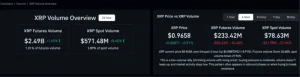
XRP market data in November 2026 highlights subdued trading activity and declining derivatives participation.
Why Are Retail Investors Selling XRP?
The recent decline cannot be explained by a single event. Several factors appear to be affecting retail confidence simultaneously.
1. Falling Prices Are Encouraging Risk Reduction
XRP’s failure to maintain the $1 level has become an important psychological factor.
Retail investors often use round-number prices as informal reference points. When an asset drops below a level such as $1, some holders may decide to reduce exposure rather than continue waiting for a recovery.
This behaviour can become more pronounced after a prolonged downtrend.
For example, consider an investor who purchased 1,000 XRP at $1.50.
| XRP price | Value of 1,000 XRP | Unrealised loss |
| $1.50 | $1,500 | $0 |
| $1.20 | $1,200 | $300 |
| $1.00 | $1,000 | $500 |
| $0.95 | $950 | $550 |
| $0.90 | $900 | $600 |
A fall to $0.90 would represent a 40% decline from the original purchase price.
For investors who entered the market expecting rapid appreciation, such losses can influence their willingness to continue holding XRP.
However, the example illustrates potential investor behaviour rather than proving that a particular group has sold.
2. Binance Trading Activity Has Declined
One of the most widely discussed indicators is the reduction in XRP trading volume on Binance.
Software engineer and XRP commentator Vincent Van Code highlighted daily XRP/USDT trading volume of approximately $100 million in a 17 November social media post.
He interpreted the decline as evidence that retail participants were leaving the market rather than large holders aggressively liquidating positions.
That interpretation has attracted attention, but it needs qualification.
Lower trading volume can mean that investors are selling less, buying less, moving to other trading venues or simply becoming inactive.
It cannot independently establish whether the number of retail holders has declined.
CoinGlass data on 20 November showed Binance’s XRP/USDT spot market recording approximately $111.64 million in trading volume, broadly consistent with reports of subdued activity.
Low volume also creates a liquidity concern. If fewer orders are available near the current market price, a relatively large transaction may cause a greater price movement.
This is why decreasing trading participation can increase short-term volatility without necessarily determining the direction of the next price move.
3. The Wider Cryptocurrency Market Remains Weak
XRP’s decline has taken place alongside weakness in Bitcoin and other major digital assets.
When cryptocurrency prices fall simultaneously, investors may reduce exposure across several holdings rather than sell XRP because of a problem specific to the XRP Ledger.
Uncertain interest-rate expectations, changing global risk appetite and reduced willingness to hold speculative assets can all contribute to this behaviour.
The relationship between monetary policy and cryptocurrency valuations is explored in our analysis of the Federal Reserve’s impact on Bitcoin prices.
Although Bitcoin and XRP have different market structures, both can be affected by changes in liquidity and investor sentiment.
Does Falling XRP Trading Volume Mean Retail Investors Have Capitulated?
Not necessarily.
Capitulation generally refers to a period when investors abandon positions after sustained losses, sometimes selling rapidly despite unfavourable prices.
A genuine retail capitulation event would normally require stronger evidence than a single exchange’s volume decline.
For example, analysts might examine whether smaller wallet balances are decreasing, whether exchange deposits are increasing and whether realised losses are rising.
There are several important distinctions:
| Market observation | What it confirms | What it does not confirm |
| Lower Binance spot volume | Fewer dollars traded on that market | Retail investors have all exited |
| Falling futures open interest | Fewer outstanding derivatives positions | Spot XRP holders have sold |
| Increasing exchange deposits | More XRP transferred to identified exchange wallets | Every deposited token was sold |
| Falling small-wallet balances | Reduced holdings in selected address groups | Every wallet belongs to a unique retail investor |
| Large withdrawals from exchanges | XRP moved out of identified exchange wallets | The receiving investor intends to hold permanently |
Our findings suggest that reduced market participation is currently easier to demonstrate than a comprehensive retail sell-off.
Some investors may have realised losses, while others may simply be avoiding new positions until the market becomes more stable.
There is also a measurement problem: one investor can control multiple XRP addresses, while an exchange can manage assets belonging to many customers through a comparatively small number of wallets.
Consequently, wallet statistics should not be treated as an exact count of individual retail investors.
Are XRP Whales Buying While Retail Investors Exit?
Large XRP transfers have generated additional speculation during the market decline.
However, an important November transaction illustrates why whale movements need to be examined carefully.
According to CoinDesk’s blockchain analysis, a large XRP holder transferred approximately 281 million XRP in two equal transactions on 6 and 17 November.
The combined transfers were valued at roughly $270 million during the reporting period.
Despite the size of these movements, the receiving addresses were not identified as exchange deposit wallets.
The addresses had also been prepared in advance, with smaller test transactions recorded before the larger transfers.
This pattern was consistent with a planned custody arrangement rather than clear evidence of an imminent market sale.
The distinction is particularly important because large transactions frequently attract attention on social media.
A whale transferring tokens between wallets under its control does not necessarily create selling pressure.
Similarly, exchange withdrawals might indicate accumulation, custody restructuring or operational activity, but the blockchain record alone cannot prove the owner’s intentions.
We previously examined this issue in our coverage of the Ripple 75 million XRP transfer, where the difference between liquidity movements and outright selling was central to understanding the transaction.
Investors can investigate XRP movements through the official XRP Ledger explorers directory, which identifies tools for reviewing wallet balances, transaction histories and network activity.
How Are Institutional Investors Reacting to XRP’s Decline?
Retail participation is only one part of the XRP market.
Institutional demand through exchange-traded funds and other investment products also influences sentiment and liquidity.
During the week of 9–13 November 2026, US-listed spot XRP ETFs recorded approximately $19.13 million in net withdrawals, according to market reports using fund-flow tracking data.
This was a notable reversal from periods earlier in 2026 when XRP investment products attracted substantial inflows.
The significance of ETF outflows is not simply that investors are selling.
It is that a potential source of additional demand has weakened while XRP is already struggling to regain important price levels.
Nevertheless, an ETF outflow should not be equated with an equivalent amount of spot XRP immediately being sold on an exchange. Fund creations, redemptions, hedging arrangements and custody practices can affect how flows translate into market transactions.
Our earlier analysis of XRP crypto fund inflows shows how institutional appetite previously helped support confidence in the cryptocurrency.
Comparing that earlier demand with November’s weaker flows provides a more balanced view of changing market conditions.
If retail participation continues to fall while institutional flows remain negative, XRP may struggle to establish sustained upward momentum.
Conversely, renewed inflows accompanied by stronger spot buying could indicate that demand is recovering.
What XRP Price Levels Could Determine the Next Market Movement?
XRP’s next direction will depend partly on whether buyers can defend recent support areas and whether the cryptocurrency can recover above $1.
On 19 November, FXEmpire analyst Alejandro Arrieche identified $0.93 and $1.01 as important liquidity areas, with approximately $0.95 functioning as a near-term reference level.
Meanwhile, FXStreet’s analysis highlighted the $0.90–$1.00 trading range, with higher moving-average resistance around $1.20 and above.
These levels provide useful reference points, although they are not guaranteed price targets.
| Price level | Technical significance | Possible market reaction |
| $0.90 | Recent lower trading range | A sustained break could increase bearish pressure |
| $0.93 | Near-term liquidity area | Traders may watch for a reaction or renewed selling |
| $0.95 | Short-term reference area | Holding this level could support stabilisation |
| $1.00–$1.01 | Psychological resistance and liquidity area | A sustained breakout could improve sentiment |
| $1.20–$1.25 | Higher moving-average resistance region | Recovery towards this area would face another test |
The $1 level is particularly important because it represents both a psychological threshold and an area where previous recovery attempts have struggled.
However, technical levels are most useful when considered alongside trading volume.
A brief move above $1 on declining volume would provide less convincing evidence of a recovery than a sustained breakout accompanied by growing demand.
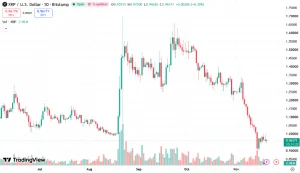
XRP’s November 2026 price chart shows the importance of the $0.90 support area and resistance around $1.
Could XRP Recover After the Retail Investor Sell-Off?
A recovery remains possible, but reduced market participation means investors should distinguish a temporary rebound from a sustained reversal.
Our assessment suggests three broad scenarios.
Bullish Scenario: Retail and Institutional Demand Return
If XRP recovers above $1 and begins attracting stronger spot trading volume, investor sentiment could improve.
A sustained recovery would become more convincing if accompanied by stabilising futures open interest, reduced selling pressure and renewed ETF inflows.
This combination would suggest that fresh demand is supporting the move rather than the price rising only because short sellers are closing positions.
Neutral Scenario: XRP Continues Trading Sideways
XRP could remain within a broad consolidation range around $0.90–$1.00.
In this situation, some investors may continue holding existing positions while avoiding additional purchases.
Trading volume may remain subdued until a stronger market catalyst emerges.
Sideways movement would not necessarily indicate that the cryptocurrency has established a permanent bottom.
Bearish Scenario: Support Fails and Selling Accelerates
If XRP breaks below the $0.90 area and fails to recover, further declines could follow.
This risk would increase if ETF outflows persist, spot buying remains weak and derivatives liquidations intensify.
However, a break below support does not guarantee a prolonged decline. Cryptocurrency prices can reverse sharply, particularly when liquidity is limited.
The stronger signal would be repeated daily closes below support combined with continued selling pressure.
Could Ripple’s XRP Supply Affect Investor Confidence?
Ripple’s XRP holdings and the network’s supply structure are another factor investors should understand.
XRP is the native digital asset of the XRP Ledger, while Ripple is a separate technology company that holds XRP and develops products using blockchain infrastructure.
According to Ripple’s official XRP information, the company reported the following figures as of 30 September 2026:
| Supply information | XRP amount |
| Total XRP held by Ripple | 36.81 billion |
| XRP held in escrow | 31.70 billion |
| XRP distributed | 63.18 billion |
Ripple
Escrow arrangements can influence expectations about future XRP supply. However, scheduled escrow releases should not automatically be interpreted as immediate market sales.
Investors need to distinguish tokens becoming available under an escrow agreement from tokens actually being sold into trading markets.
Ripple’s reported holdings also cannot independently explain the recent reduction in Binance retail trading activity.
Understanding this difference is important when assessing whether XRP’s decline reflects changes in circulating supply, market demand or investor sentiment.
What Should UK XRP Investors Consider During the Sell-Off?
For UK investors, the recent market conditions create several considerations beyond short-term price movements.
One is liquidity. When trading activity falls, the difference between the quoted purchase price and selling price can widen. This may become particularly relevant for larger transactions or periods of heightened volatility.
Another is currency exposure.
Most widely reported XRP price levels are denominated in US dollars. UK investors who hold XRP through GBP trading pairs may experience additional valuation changes as the pound moves against the dollar.
Investors should also distinguish between owning XRP directly and obtaining exposure through an investment product.
Direct ownership involves cryptocurrency custody, exchange and wallet considerations. An investment product introduces its own fees, trading conditions and counterparty arrangements.
Readers assessing long-term exposure can explore our guide on whether XRP is a good investment, which examines risks and potential investment considerations.
Finally, UK investors who sell XRP may need to consider Capital Gains Tax, depending on their overall circumstances, proceeds, allowable costs and available reliefs.
The wider reporting and record-keeping implications are discussed in our coverage of HMRC crypto tax warning letters.
A decision to reduce cryptocurrency exposure should therefore account for the transaction’s full financial consequences rather than focusing exclusively on the headline XRP price.
Which Indicators Could Show That XRP Retail Selling Is Slowing?
No single metric can reliably identify the end of a cryptocurrency sell-off.
A more useful approach is to examine whether several independent indicators begin improving together.
| Indicator | Potential recovery signal | Warning signal |
| Spot trading volume | Increasing volume during sustained price gains | Low volume or heavy selling during declines |
| Futures open interest | Gradual recovery alongside stable funding and spot demand | Rising leverage without underlying buying support |
| XRP ETF flows | Sustained net inflows | Continued withdrawals |
| Exchange deposits | Reduced sell-side deposits, with context | Sharp increases in deposits linked to selling |
| Retail wallet activity | Stabilising holdings across comparable wallet groups | Persistent reductions in smaller balances |
| Price structure | Higher lows and sustained resistance breakouts | Repeated failed rallies and lower lows |
There is also an important distinction between stabilising prices and improving participation.
XRP could stop falling simply because selling pressure temporarily decreases. That would not necessarily mean new investors are entering the market.
A stronger recovery would involve improving prices alongside evidence of fresh demand.
This is why trading volume, ETF flows and open interest are most informative when analysed together rather than independently.
What Does the XRP Retail Investor Sell-Off Mean for the Market?
The XRP retail investor sell-off highlights a broader challenge facing cryptocurrency markets: prices can remain under pressure even when major holders appear reluctant to sell.
Evidence from November 2026 points to declining speculative participation, weaker trading volume and reduced institutional fund demand.
However, the available data does not establish that all retail investors are exiting or that every large XRP transfer represents accumulation.
The distinction matters because different causes of a market decline can produce different recovery patterns.
If weak participation is primarily responsible, renewed investor interest may become essential for a sustained recovery. If forced liquidations and temporary risk reduction are dominant factors, conditions could stabilise as leverage decreases.
For now, the most relevant developments to monitor are XRP’s behaviour around $0.90–$1.00, changes in exchange trading activity and whether institutional fund flows begin improving.
Frequently Asked Questions
Why are XRP retail investors selling in November 2026?
Falling prices, reduced market confidence and wider cryptocurrency weakness are possible contributors. However, declining trading volume does not conclusively prove that retail investors are selling their XRP holdings.
Is XRP experiencing a retail investor capitulation?
There are signs of weaker participation and risk reduction, but definitive capitulation would require stronger evidence from realised losses, smaller-wallet balances and exchange selling activity.
Are XRP whales accumulating during the sell-off?
Some large XRP transfers have gone to wallets not identified as exchange deposit addresses. This may be consistent with custody changes or holding activity, but does not independently confirm accumulation.
Why has XRP trading volume fallen on Binance?
Reduced speculative activity, fewer active traders and changes in trading behaviour may be contributing. Some market activity may also take place through other exchanges, derivatives or over-the-counter arrangements.
Could XRP fall below $0.90?
Yes. A sustained break below the recent $0.90 trading area could increase downside risk, although this is a conditional scenario rather than a guaranteed price prediction.
Will XRP recover above $1?
A recovery above $1 remains possible. Stronger spot trading volume, improving ETF flows and sustained buying demand would provide more convincing evidence of a recovery.
Should investors sell XRP during the current decline?
That depends on individual investment objectives, risk tolerance and financial circumstances. Falling prices alone are not sufficient grounds for a universal buy-or-sell recommendation.