



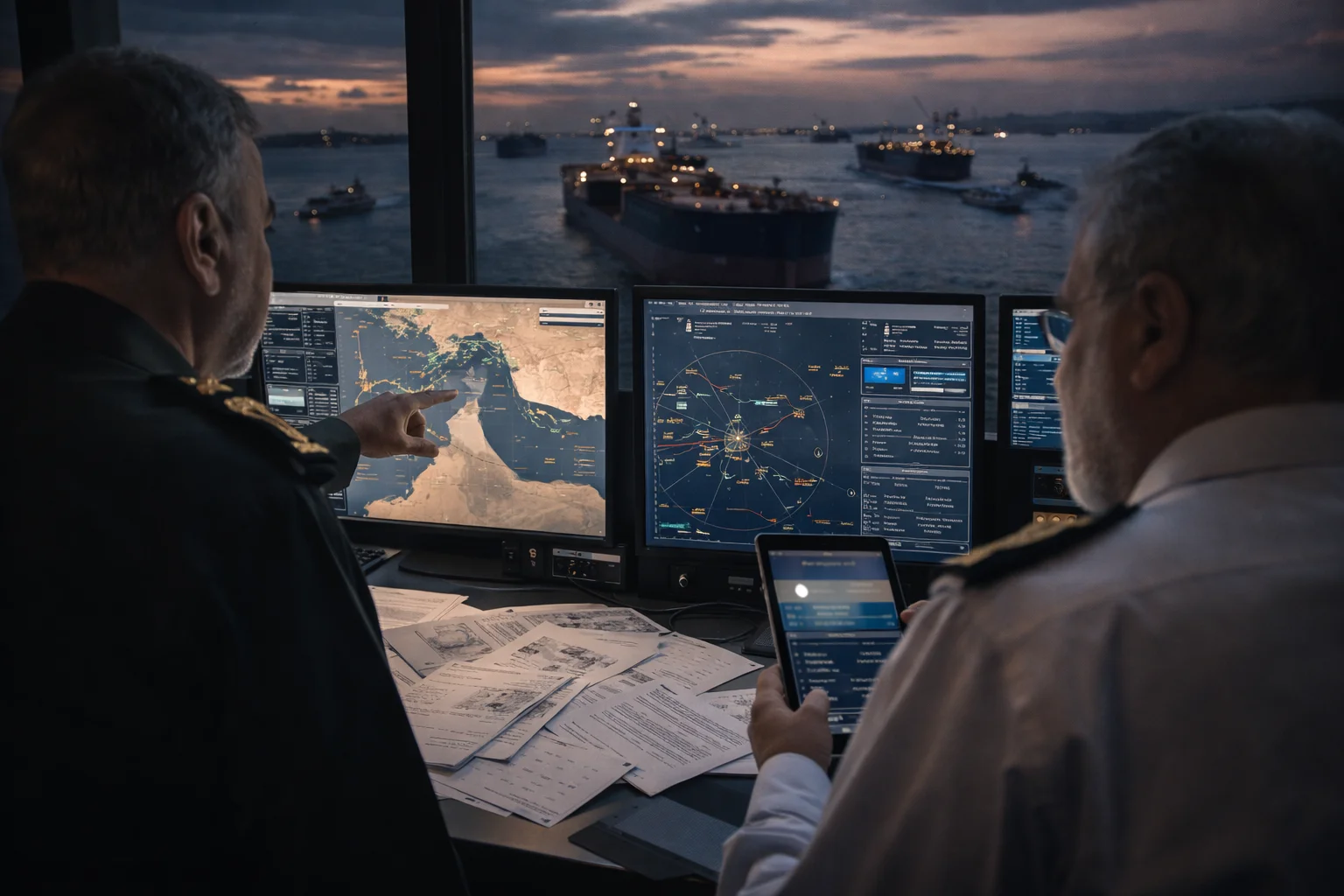
Following the April 2026 ceasefire, the Strait of Hormuz remains under a “Managed Transit” protocol, with the IRGC limiting traffic to approximately 12 vessels daily. Central to this new maritime order is the Strait of Hormuz Management Plan, requiring shipping firms to settle transit tolls in Bitcoin or Chinese Yuan.
With fees reaching $1 per barrel, these digital payments allow Tehran to bypass Western banking sanctions while controlling 20% of global oil flow. This guide analyzes the technical payment architecture, the $2M-per-tanker fee structure, and the critical legal risks for UK operators navigating these “crypto-tolls.”
Key Takeaways
- Iran is reportedly charging cryptocurrency tolls for ships travelling through the Strait of Hormuz.
- The fee is believed to be around $1 per barrel of oil carried by the tanker.
- Cryptocurrency allows Iran to avoid sanctions and receive payments without using Western banks.
- The Strait of Hormuz handles nearly 20% of the world’s oil and gas supply.
- Shipping firms are delaying journeys because of uncertainty over how the new system will work.
- UK fuel prices could remain high if the disruption continues.
What Are Strait of Hormuz Cryptocurrency Fees?
Strait of Hormuz cryptocurrency fees are digital payments that Iran is reportedly asking shipping companies to make before they can pass through the narrow waterway between the Persian Gulf and the Gulf of Oman.
The route is one of the most valuable shipping lanes in the world because it carries oil, gas and fuel from countries such as Saudi Arabia, Qatar and the UAE.
According to reports, ships are first required to contact Iranian authorities and provide details of their cargo. Iran then decides whether the vessel may continue through the route and informs the company of the amount to be paid. The payment is then made in Bitcoin or another digital currency before permission is granted.
| Type of Vessel | Estimated Fee | Payment Method | Permission Required |
| Oil tanker carrying crude oil | $1 per barrel | Cryptocurrency | Yes |
| Empty oil tanker | No fee | None | Yes |
| Cargo vessel with fuel products | Variable fee | Cryptocurrency or yuan | Yes |
The introduction of these Strait of Hormuz cryptocurrency fees is unusual because international shipping routes are normally protected by international law and remain open to all vessels. Iran’s approach effectively turns the route into a controlled corridor in which access depends on Tehran’s approval.
Why Is Iran Charging Cryptocurrency Fees for Passage Through the Strait of Hormuz?
Iran is charging these fees because it wants to maintain control over the Strait of Hormuz after recent military tensions and ceasefire negotiations.
Tehran argues that it needs to inspect vessels and monitor what enters and leaves the region. By charging a fee, Iran also gains an additional source of income at a time when sanctions continue to limit its economy.
The fees also allow Iran to increase its political influence. Since the Strait of Hormuz is responsible for around one fifth of global oil shipments, any country that controls access to it gains significant power over international markets. Even a small delay can raise global oil prices and affect petrol costs in the UK.
Dr Michael Warren, Global Energy Economist: “Iran is not simply collecting money from passing ships. It is using cryptocurrency tolls to remind the world that whoever controls the Strait of Hormuz can influence global oil prices and political negotiations.”
The Impact of International Sanctions on Iran
International sanctions have made it difficult for Iran to receive money through normal banking systems. Many Western banks refuse to process payments linked to Iran because of restrictions imposed by the United States and European countries.
As a result, Iran has increasingly turned to alternative payment systems such as yuan and cryptocurrency. These methods are harder to trace and can often be transferred quickly without involving major financial institutions.
This explains why Iran is demanding Strait of Hormuz cryptocurrency fees instead of accepting bank transfers. Digital currencies make it possible for Iran to collect revenue without exposing itself to the same level of financial scrutiny.
How Do Ships Pay Iran to Pass Through the Strait of Hormuz?
The IRGC’s “Managed Transit” protocol is a multi-step verification process that bypasses the Western financial system entirely. Following the April 2026 ceasefire, the system has been codified into a formal “Strait of Hormuz Management Plan.”
- Step 1: The Cargo Declaration: Vessels must email Iranian maritime authorities 24 hours before arrival.
- Step 2: Fee Assessment: Based on the current rate of $1 per barrel, a quote is issued. For a standard VLCC tanker, this typically equates to a $2 million Bitcoin payment.
- Step 3: Settlement Window: IRGC authorities use the Qeshm Island Crypto Conversion Window to monitor the blockchain. Reports suggest firms are given a “few-minute window” to settle the transaction in Bitcoin or USDT (TRON network).
- Step 4: The VHF Passcode: Once the transaction is confirmed on-chain, the vessel is broadcast a unique passcode via VHF radio, permitting passage through the “Northern Corridor” near Larak Island.
The Approval Process for Oil Tankers
The approval process has become one of the main reasons why ships are being delayed. Before the recent crisis, more than 100 ships could pass through the Strait of Hormuz each day. Now, only a small number of vessels are expected to receive permission.
Shipping firms are worried because the process depends entirely on Iran’s decision. If Tehran delays the approval, ships may remain stuck in the Gulf for days. That creates higher costs for fuel, insurance and cargo storage.
Some industry experts believe that hundreds of ships are currently waiting for permission to leave the Gulf. This backlog could take weeks to clear, even if the ceasefire remains stable.
Why Bitcoin and Other Digital Currencies Are Used?
Bitcoin and other cryptocurrencies are useful to Iran because they allow fast international transfers without involving banks. Unlike traditional payments, cryptocurrency can be sent directly from one company to another without needing approval from financial authorities.
Digital currencies are also more difficult to freeze or block. If a company tried to send dollars to Iran through a bank, the transaction might be stopped immediately. Cryptocurrency avoids this problem because it operates on a separate network.
Professor James Holloway, International Trade Specialist: “For Iran, cryptocurrency is not a modern convenience. It is one of the few remaining payment tools that can operate outside the sanctions system and still move money across borders.”
UK Legal Implications: The OFSI Perspective
For UK-based shipping firms, paying “Strait of Hormuz cryptocurrency fees” presents a severe legal dilemma. The Office of Financial Sanctions Implementation (OFSI) has not granted a general license for these payments.
- Sanctions Evasion: Direct crypto transfers to IRGC-linked wallets may violate the Sanctions and Anti-Money Laundering Act 2018.
- Insurance Voiding: Most P&I Clubs (Protection and Indemnity) may void coverage if a vessel pays a “toll” that is classified as a ransom or a sanctioned transaction.
- The Yuan Alternative: Some firms are utilizing the Kunlun Bank / CIPS network to pay in Chinese Yuan, as it operates outside the Western SWIFT system, though this remains a “grey area” for UK compliance.
Why Has the Strait of Hormuz Become So Important to Global Trade?
The Strait of Hormuz is important because it is one of the busiest energy routes in the world. Around 20% of global oil and gas supplies travel through the narrow channel every day. If the route is blocked or delayed, fuel shortages and price increases can quickly spread around the world.
For the UK, this matters because higher oil prices eventually increase the cost of petrol, diesel and household energy bills. Even if Britain does not import all of its oil directly through the Strait of Hormuz, global prices still affect the UK market.
The route is also vital for countries in the Middle East. Saudi Arabia, Qatar and the UAE all rely on the Strait of Hormuz to export oil and gas to Europe and Asia. If Iran controls access, these countries become more dependent on Tehran’s decisions.
| Country or Region | Main Dependence on Strait of Hormuz | Potential Impact |
| United Kingdom | Global fuel prices | Higher petrol and energy costs |
| Saudi Arabia | Oil exports | Lower export volumes |
| Qatar | Natural gas shipments | Supply disruption |
| UAE | Fuel and trade exports | Delays and higher shipping costs |
How Much Is Iran Charging in Cryptocurrency Fees?
Iran is believed to be charging approximately $1 per barrel of oil carried by the tanker. For a large oil tanker carrying two million barrels, that could result in a payment of around $2 million.
This fee may appear small compared with the total value of the cargo, but it still adds a significant extra cost for shipping companies. When combined with insurance costs and delays, the total expense can become much higher.
A company operating several tankers each month could end up paying millions of pounds in Strait of Hormuz cryptocurrency fees. Those costs are likely to be passed on to consumers through higher prices for oil, gas and fuel.
Why Is Iran Asking for Cryptocurrency Instead of Traditional Currency?

Iran has spent years looking for ways to reduce the effect of sanctions. Cryptocurrency gives the country a method of receiving money even when other channels have been blocked.
Some reports suggest that Iran may also accept yuan because Chinese currency is less dependent on Western banking systems. This provides Iran with an alternative if shipping firms do not wish to use Bitcoin or another cryptocurrency.
By offering both options, Iran makes it more likely that companies will still pay rather than refuse access to the Strait of Hormuz.
Sarah Mitchell, Maritime Security Consultant: “The move towards cryptocurrency tolls shows how geopolitical disputes are beginning to reshape international trade. Shipping firms are no longer just dealing with fuel and insurance costs; they are now being forced to navigate digital payment systems as well.”
The Role of Yuan and Cryptocurrency in Iranian Trade
The growing use of yuan and cryptocurrency reflects a wider shift in international trade. More countries are beginning to move away from the US dollar when sanctions or political tensions make traditional payments difficult.
Iran has already used cryptocurrency in other parts of its economy, including imports and mining operations. The new Strait of Hormuz cryptocurrency fees appear to be another example of the same strategy.
If the system continues, other countries facing sanctions may eventually try to create similar payment methods for trade routes or exports.
How Could Strait of Hormuz Cryptocurrency Fees Affect Oil Prices in the UK?
The UK could see higher oil prices if the disruption in the Strait of Hormuz continues. Even if ships are eventually allowed to pass, delays and extra costs will increase the price of transporting oil.
When oil companies pay more to move fuel around the world, they usually pass those costs on to customers. That means UK drivers could pay more for petrol and diesel in the weeks ahead.
Energy companies may also face higher costs for natural gas and electricity. If that happens, households across Britain could see further increases in their energy bills during the coming months.
What Are Shipping Companies and Oil Tankers Doing in Response?
Many shipping companies are taking a cautious approach and delaying journeys through the Strait of Hormuz. Some firms are waiting to see whether the ceasefire remains stable before sending more vessels into the area.
Others are looking for alternative routes, although there are very few options available. Most of the oil exported from the Gulf still needs to pass through the Strait of Hormuz.
Several companies are also discussing whether they should use cryptocurrency if required. Some may decide that paying the fee is easier than risking a delay, while others may refuse because of legal concerns.
Reactions From Maersk and Other Shipping Firms
Large shipping firms such as Maersk have already said that they are reviewing the situation carefully. Companies are worried not only about the cost of the fee but also about the legal and security risks involved.
Many businesses do not normally make large cryptocurrency payments. They may need legal advice, financial approval and new technology before they can transfer millions of pounds in Bitcoin or another digital currency.
As a result, shipping companies are likely to continue delaying decisions until they understand exactly how Iran’s system will operate.
Could Iran’s Cryptocurrency Toll System Change Global Shipping?

Iran’s new system could have a lasting effect on global shipping if other countries decide to copy it. Governments that control important trade routes may see cryptocurrency tolls as a way to increase revenue and avoid sanctions.
At the same time, shipping companies may need to prepare for a future in which digital payments become more common in international trade. Firms that understand cryptocurrency may gain an advantage because they can respond more quickly to new rules.
For now, however, most businesses still view the situation in the Strait of Hormuz as an emergency measure rather than a permanent change. Whether it continues will depend on political tensions, sanctions and the future of the ceasefire.
Conclusion: Will Strait of Hormuz Cryptocurrency Fees Continue?
The Strait of Hormuz cryptocurrency fees are likely to continue for as long as Iran believes they strengthen its political and economic position.
By demanding payment in Bitcoin, yuan or other digital currencies, Iran can maintain control over one of the world’s most important trade routes while avoiding international sanctions.
However, the system may not last forever. Shipping companies, Gulf states and Western governments are already opposing the policy because it increases costs and creates uncertainty. If international pressure grows or a more stable ceasefire is agreed, Iran may eventually be forced to remove the fees.
FAQ
Can Iran Legally Charge Cryptocurrency Fees in the Strait of Hormuz?
The legality is disputed. Iran says it can control traffic near its coast, but many countries argue that the Strait of Hormuz is an international waterway.
Which Cryptocurrencies Are Most Likely to Be Used for These Fees?
Bitcoin is the most likely option. Iran may also accept other cryptocurrencies or yuan if shipping companies cannot use Bitcoin.
Why Are Empty Tankers Allowed to Pass Without Paying?
Iran appears to charge only for ships carrying oil or fuel. Empty tankers do not carry cargo, so no fee is required.
Could Strait of Hormuz Cryptocurrency Fees Increase Petrol Prices in Britain?
Yes. Higher shipping costs and delays could push up the price of oil, leading to more expensive petrol and diesel in the UK.
Are Shipping Companies Willing to Pay Iran in Cryptocurrency?
Some may pay to avoid delays, while others are hesitant because of legal risks and the difficulty of using cryptocurrency.
How Does the Strait of Hormuz Crisis Affect Global Energy Markets?
The crisis reduces the flow of oil and gas, which can increase global energy prices and create supply concerns.
Could Other Countries Introduce Similar Cryptocurrency Tolls?
Possibly. If Iran succeeds, other countries facing sanctions or controlling trade routes may try similar systems.