


Automated crypto trading tools for Gemini include platforms like Coinrule, Bitsgap, Good Crypto, 3Commas, and TradersPost, which integrate via API to execute trades automatically. These tools support strategies such as grid trading, dollar-cost averaging, and buy-the-dip without requiring coding skills. They help traders operate 24/7, manage risk, and remove emotional bias. Advanced users can also use Gemini’s native API to build custom algorithms for high-frequency or rule-based trading. Key Takeaways: Gemini automation relies on secure API integrations with third-party tools Popular platforms include Coinrule, Bitsgap, Good Crypto, and 3Commas Strategies like DCA, GRID, and BTD are widely supported Automation improves efficiency but still requires monitoring Risk management features are essential for long-term success What Is Automated Crypto Trading on Gemini? Understanding Automated Trading in Cryptocurrency Automated crypto trading refers to the use of software tools or bots that execute trades on behalf of the user based on pre-defined conditions. These conditions can include price movements, technical indicators, or specific market patterns. On Gemini, automation is not built directly into the platform as a retail feature, but it is enabled through API connectivity with external tools. The concept is particularly valuable in cryptocurrency markets because they operate continuously, without closing hours. Traders who rely on manual execution often miss opportunities due to time constraints or emotional decision-making. Automated tools bridge this gap by reacting instantly to market changes. How Gemini supports API-based Automation? Gemini offers a robust API that allows secure integration with trading bots and platforms. Users generate API keys within their Gemini accounts and connect them to third-party tools. These keys grant limited permissions, ensuring funds remain secure while allowing trades to be executed programmatically. The API supports various functionalities such as placing orders, retrieving market data, and managing account balances. This makes it suitable for both beginner-friendly tools and advanced algorithmic trading systems designed by experienced developers. Why Use Automated Crypto Trading Tools for Gemini? Advantages of Automation in Crypto Trading Automated tools bring consistency and efficiency to trading. They follow predefined rules without deviation, which eliminates impulsive decisions caused by fear or greed. This is particularly useful in volatile crypto markets where price swings can trigger emotional reactions. Another advantage is scalability. Traders can manage multiple assets and strategies simultaneously without constant supervision. This enables diversification and better portfolio management. How Bots Reduce Emotional Decision-making? Emotion is one of the biggest challenges in trading. Automated systems remove this factor entirely by sticking to logic-based rules. For example, a bot will execute a stop-loss order immediately when conditions are met, whereas a human trader might hesitate. “Daniel Roberts, Crypto Market Analyst: “Automation doesn’t just improve efficiency; it enforces discipline. Traders who rely on bots often avoid the costly emotional mistakes that manual trading invites.”” How Does Gemini API Enable Automated Trading? Overview of Gemini API functionality Gemini’s API acts as a bridge between the exchange and trading software. It allows bots to access real-time price data, execute trades, and manage orders without manual input. This level of automation is essential for strategies that depend on speed and accuracy. The API supports REST and WebSocket protocols, enabling both standard and high-frequency trading approaches. Developers can build custom bots tailored to specific strategies, while non-technical users can rely on third-party platforms. Setting Up API Keys Securely To start automation, users must generate API keys from their Gemini account dashboard. These keys should be configured with restricted permissions, such as trading only, without withdrawal access. This ensures that even if a key is compromised, funds remain protected. Proper security practices include storing keys securely, using IP whitelisting, and regularly rotating credentials. These measures are critical for maintaining safe automated trading operations. Which Are the Most Popular Automated Crypto Trading Tools for Gemini? Several third-party platforms dominate the space due to their reliability and feature sets. These tools cater to different levels of expertise, from beginners to advanced traders. They integrate seamlessly with Gemini through API keys and provide user-friendly dashboards for managing strategies. The most widely used tools include Coinrule, Bitsgap, Good Crypto, 3Commas, and TradersPost. Each platform offers unique capabilities, ranging from simple rule-based automation to advanced signal-driven trading systems. Tool Best For Key Feature Skill Level Coinrule Beginners & rule-based users If-This-Then-That automation Beginner Bitsgap Grid trading Automated GRID and DCA bots Intermediate Good Crypto Mobile traders App-based automation Beginner 3Commas Advanced traders Signal integration & smart trading Advanced TradersPost Technical traders TradingView automation Advanced What Is Coinrule and How Does It Work with Gemini? Rule-based Automation Without Coding Coinrule is a popular platform that allows users to create automated trading strategies using simple rules. It operates on an “If This, Then That” logic, making it accessible to beginners who have no coding experience. Users can define triggers such as price drops or indicator signals to execute trades automatically. This approach simplifies complex trading strategies into manageable rules. It also allows traders to test and refine their strategies without technical barriers, making automation more inclusive. Custom Trading Strategies for Different Skill Levels Coinrule caters to both beginners and advanced users by offering pre-built templates and customisation options. Traders can choose from strategies like trend following, accumulation, or breakout trading. These templates provide a starting point while allowing flexibility for personal adjustments. The platform also includes backtesting features, enabling users to simulate strategies before applying them in live markets. This reduces risk and builds confidence in automated systems. Pros Cons No-Code Interface: Extremely beginner-friendly with intuitive rule-building. Complexity Limits: May lack depth for highly advanced custom algorithms. 250+ Templates: Offers a massive library of ready-to-use strategies. Price Tiers: Higher trade volumes and advanced features require paid plans. Backtesting: Allows users to build confidence by testing rules on historical data. No Mobile App: Currently focused on the desktop web experience. How Does Bitsgap Enhance Automated Trading on Gemini? Grid Trading and DCA Bot Functionality Bitsgap specialises in grid trading, a strategy that profits from market volatility by placing buy and sell orders within a defined range. This method is particularly

Will ETH Hit $250,000? Ethereum Price Prediction
Ethereum reaching $250,000 is theoretically possible but highly unlikely in the near to mid-term. For this to happen, Ethereum would need to evolve into a dominant global financial layer, capture a significant share of the $30+ trillion store-of-value market (gold and Bitcoin), and attract massive institutional investment. While strong fundamentals such as staking, DeFi growth, and supply reduction support long-term appreciation, the scale required for a $250,000 valuation represents a multi-decade transformation rather than an imminent milestone. Key Takeaways: Ethereum would need a multi-trillion-dollar market cap expansion Institutional adoption is critical for price acceleration Staking and reduced supply can drive long-term price pressure Competing with Bitcoin and gold is essential but challenging The prediction is speculative but not entirely impossible 2026 Market Snapshot: Current Price (April 27, 2026): ~$2,336 Market Sentiment: Consolidation phase ($2,100–$2,400 range). Next Major Target: $3,000 (dependent on ETF inflows). Technical Status: Trading below 50-week EMA; monitoring for a reversal pattern. What Does a $250,000 Ethereum Price Prediction Really Mean? A $250,000 Ethereum price prediction implies a massive shift in how global markets value digital assets. At current circulating supply levels of approximately 120 million ETH, such a price would push Ethereum’s market capitalisation to around $30 trillion. This would place it on par with the combined valuation of gold and Bitcoin, fundamentally transforming Ethereum from a utility-driven blockchain into a dominant global store of value. This level of valuation is not simply about price appreciation; it reflects a broader transition in financial systems. Ethereum would need to move beyond its current role as a smart contract platform and become a foundational infrastructure for global finance. This includes powering decentralised applications, financial settlements, and tokenised assets at scale while maintaining trust and security across institutions. Metric Current Estimate (2026) Required for $250K ETH ETH Price ~$2,300 $250,000 Market Cap ~$275 billion ~$30 trillion Adoption Level Growing Global financial dominance Institutional Involvement Moderate Extensive Can Ethereum Reach $250,000 Before Bitcoin? The idea that Ethereum could reach $250,000 before Bitcoin challenges traditional crypto narratives. Bitcoin has long been considered the primary store of value in the digital asset space, often compared to gold. Ethereum, however, offers additional utility through programmability, staking, and decentralised finance, which could give it a different growth trajectory. For Ethereum to surpass Bitcoin in this race, it would need to redefine its identity. Instead of being viewed purely as a technology platform, it must gain recognition as a monetary asset capable of preserving and growing wealth. This shift would depend heavily on investor perception, institutional strategies, and macroeconomic trends favouring yield-generating assets over static stores of value. “Raoul Pal, Macro Investor and CEO of Real Vision: “Ethereum’s strength lies in its network effects and yield potential. If institutions begin treating ETH as a productive reserve asset rather than just a tech bet, its valuation framework could change dramatically.”” What Needs to Happen for Ethereum to Hit $250,000? For Ethereum to reach such an ambitious price target, several structural and economic conditions must align. One of the most critical factors is large-scale institutional adoption. Pension funds, sovereign wealth funds, and major financial institutions would need to allocate a portion of their portfolios to Ethereum, treating it as a long-term reserve asset. Additionally, regulatory clarity, particularly in regions like the UK, would play a significant role. Clear frameworks could encourage institutional participation by reducing uncertainty and risk. At the same time, Ethereum’s infrastructure must continue evolving to handle increased demand efficiently, ensuring scalability and cost-effectiveness. Expansion into global financial systems Integration with traditional banking infrastructure Increased trust through regulation and compliance Without these developments, the path to $250,000 remains highly speculative and uncertain. Technical Catalysts: The 2026 Roadmap Glamsterdam Fork (Target: H1 2026): This upgrade introduces parallel transaction processing and on-chain block building through ePBS (EIP-7732). It aims to reduce MEV extraction by up to 70% and targets a throughput of 10,000 transactions per second. Hegota Fork (Target: H2 2026): Scheduled for late 2026, this upgrade focuses on Verkle Trees, which could reduce node storage requirements by roughly 90%. This is critical for decentralization, allowing the network to scale without compromising its trustless nature. How Do Supply Dynamics Impact Ethereum’s Price Growth? Ethereum’s supply dynamics are one of its most compelling features when considering long-term price predictions. Since the transition to Proof of Stake, a significant portion of ETH has been locked in staking contracts. This reduces the liquid supply available for trading, which can create upward price pressure when demand increases. Furthermore, Ethereum’s fee-burning mechanism introduced through EIP-1559 permanently removes a portion of transaction fees from circulation. Over time, this can make ETH deflationary, particularly during periods of high network activity. Reduced supply combined with growing demand creates a favourable environment for price appreciation. Supply Factor Impact on Price Staking Lock-up Reduces circulating supply Fee Burning Decreases total supply over time Increased Demand Drives price upward Liquidity Constraints Amplifies volatility Could Staking Rewards Make Ethereum More Valuable Than Bitcoin? One of Ethereum’s unique advantages over Bitcoin is its ability to generate yield through staking. Investors who hold ETH can earn passive income by participating in network validation, making Ethereum attractive not just as a growth asset but also as an income-generating one. This dual appeal could significantly influence investor behaviour, particularly among institutions seeking both capital appreciation and yield. In a low-interest-rate environment, assets that provide consistent returns are often prioritised. Ethereum’s staking mechanism positions it well in this context, potentially giving it an edge over Bitcoin. “Meltem Demirors, Chief Strategy Officer at CoinShares: “Yield is a powerful narrative in institutional investing. Ethereum’s staking rewards introduce a bond-like characteristic that Bitcoin simply doesn’t offer, which could reshape allocation strategies over time.”” Is Ethereum’s Utility Driving Its Long-Term Price Potential? Ethereum’s utility extends far beyond simple transactions. It serves as the backbone for decentralised finance, enabling lending, borrowing, and trading without intermediaries. Additionally, Ethereum supports the issuance of stablecoins and the tokenisation of real-world assets, including property and securities. These use cases contribute to sustained demand
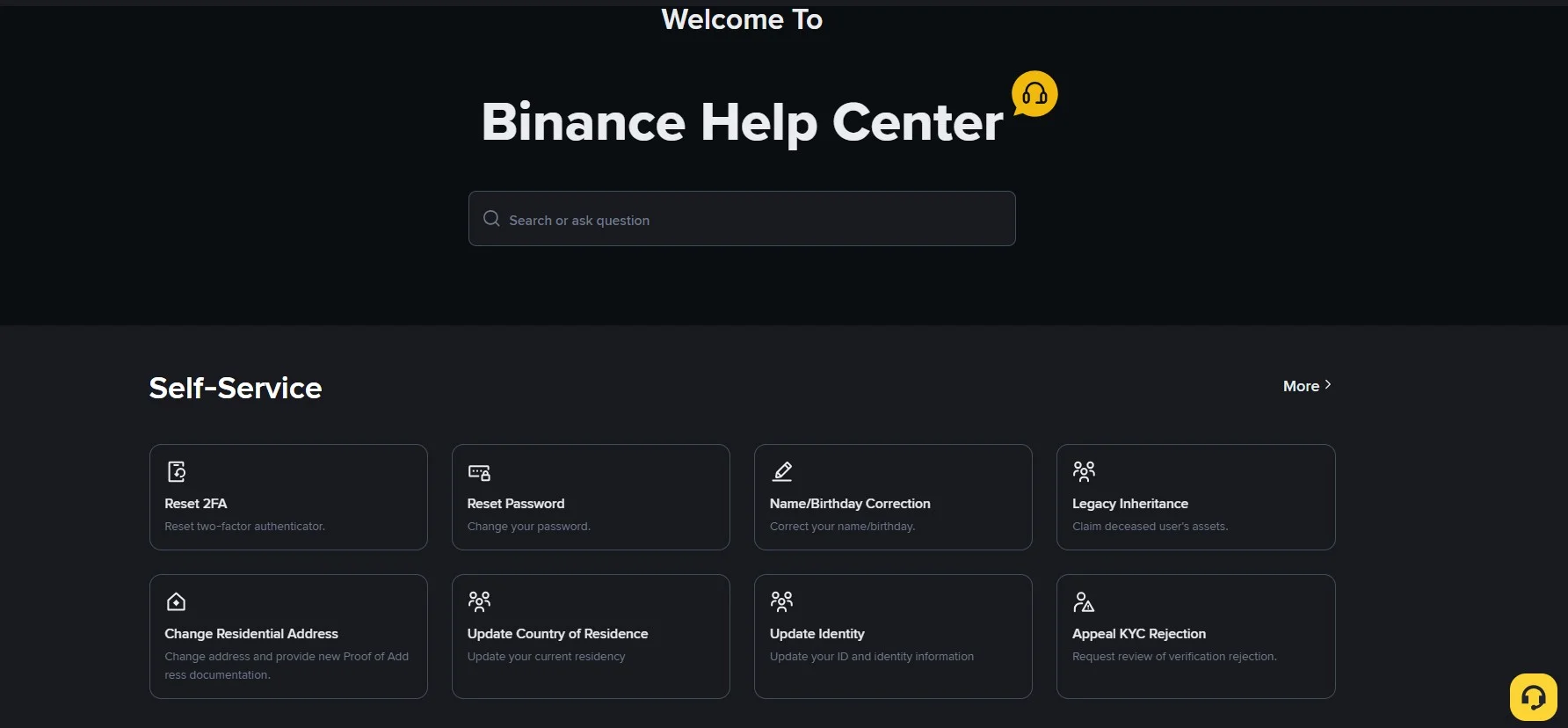
How to Contact Binance Support in 2026: A Complete Guide for UK Users
To contact Binance support in 2026, users should access the official Binance Help Centre via the website or app, where they can use live chat or submit a support ticket. Binance no longer offers a direct customer service phone number, so all communication is handled digitally. UK users can log into their accounts, navigate to the support section, and describe their issue for assistance. The live chat feature is typically the fastest method, while tickets are better for complex queries. Quick Summary: How to Contact Binance Support in 2026 To contact Binance support in the UK, you must use the official digital channels as there is no direct phone number. Fastest Method: Use the 24/7 Live Chat via the Binance app or website. For Complex Issues: Submit a Support Ticket through the Help Centre for detailed technical or security matters. Self-Service: Browse the Binance Help Centre for instant solutions to verification or transaction queries. Key Takeaways: Binance support is available through live chat and support tickets only No official Binance phone number exists for customer service The Help Centre provides answers to common issues instantly UK users should always use official channels to avoid scams Response times vary depending on the complexity of the issue Why Might You Need to Contact Binance Support in 2026? Understanding how to contact Binance support becomes essential when users encounter technical or account-related issues. In 2026, Binance continues to serve millions of users globally, including a significant base in the UK, which increases the likelihood of support queries. Common situations that require assistance include account login problems, delayed withdrawals, failed transactions, identity verification issues, or concerns about account security. As cryptocurrency regulations evolve in the UK, users may also need help navigating compliance-related updates or restrictions imposed on their accounts. A blockchain analyst, Daniel Reeves, explained: “Most support queries we see today aren’t about trading errors but about verification delays and security checks. Users often underestimate how strict compliance has become in regulated regions like the UK.” The Impact of UK Regulations on Support In 2026, the UK’s evolving financial landscape means that many support queries are triggered by mandatory compliance checks. If your account is restricted, it is often due to updated FCA-aligned security protocols or identity re-verification requirements. Providing UK-compliant documentation, such as clear proof of address or updated ID, is the most effective way to resolve these “Compliance Hold” issues through the ticket system. What Are the Official Ways to Contact Binance Support? Binance Help Centre The Binance Help Centre is the first point of contact for most users. It contains a vast library of articles that explain how to resolve common issues without needing direct interaction with a support agent. Topics range from account setup and verification to trading guidance and troubleshooting errors. Users can search using keywords or browse categories. The platform uses AI-driven suggestions to guide users toward relevant solutions, which can significantly reduce the need to escalate issues further. Binance Live Chat Support Live chat is the most efficient method for users wondering how to contact Binance support quickly. Available directly on the Binance website and mobile app, this feature connects users with either an automated assistant or a human representative. Initially, users interact with a chatbot that filters queries and suggests solutions. If the issue persists, the query is escalated to a live agent. This layered approach helps reduce waiting times and ensures that agents handle only complex cases. Binance Support Ticket System For more technical or sensitive issues, submitting a support ticket is the recommended route. This method allows users to provide detailed explanations, attach documents, and track the progress of their request. Tickets are particularly useful for issues like account recovery, disputed transactions, or verification appeals. While response times may be longer compared to live chat, the depth of support provided is typically more comprehensive. How to Contact Binance Support via Live Chat in 2026? Accessing live chat is straightforward but requires users to be logged into their Binance account. Once logged in, users can navigate to the support section and initiate a chat session. The process begins with selecting a relevant category, which helps the system understand the issue. After that, users can describe their problem in detail. If the chatbot cannot resolve the issue, it transfers the conversation to a human agent. Step Action Purpose 1 Log into Binance account Ensures account-specific assistance 2 Navigate to Help Centre Access support tools 3 Select live chat option Initiate communication 4 Describe issue clearly Helps faster resolution 5 Wait for escalation Connects to human agent Providing accurate details, such as transaction IDs or screenshots, can significantly improve response times and the quality of assistance received. How Do You Submit a Binance Support Ticket Successfully? Submitting a support ticket requires attention to detail. Users should include all relevant information, such as account details, timestamps, and descriptions of the issue. Incomplete tickets often lead to delays or repeated follow-ups. It is also important to choose the correct category when submitting a ticket. Misclassification can result in the request being routed to the wrong department, increasing resolution time. Element Description Importance Issue category Select the closest match Ensures proper routing Detailed description Explain the problem clearly Reduces back-and-forth Attachments Screenshots or documents Provides evidence Contact information Accurate email or ID Enables communication Is There a Binance Support Email or Contact Number Available? Critical Security Alert for UK Users Binance will never call you or ask for your password or 2FA codes over the phone. Any website or social media profile providing a “Binance UK Support Number” is a phishing scam. All official support is handled exclusively through the logged-in Binance interface. A cybersecurity consultant, Emma Clarke, noted: “Any website claiming to provide a Binance phone number is almost certainly fraudulent. Users should rely strictly on in-platform communication to avoid phishing scams.” How Can UK Users Get Faster Responses from Binance Support? Response times depend on multiple factors, including the complexity of the issue and the volume

Is the Crypto Fear and Greed Index Signalling a Buy Opportunity?
The crypto fear and greed index can indicate potential buying opportunities, particularly when it reflects extreme fear, as markets are often undervalued during periods of panic. However, it should not be used in isolation. While historically it has aligned with market bottoms, it does not guarantee price reversals. A balanced approach combining sentiment analysis with technical and fundamental indicators offers a more reliable strategy for UK investors evaluating whether now is the right time to buy crypto. As of today, the Crypto Fear and Greed Index has climbed to a score of 46, signaling a transition out of the “Extreme Fear” zone that dominated the early months of the year. While still technically in “Fear” territory, this is a three-month high up significantly from the record low of 5 recorded in February following the introduction of global trade tariffs. With Bitcoin currently stabilizing around the $77,000–$78,000 level, this recovery in sentiment suggests that the “panic floor” may have been established, though the market remains cautious. Key Takeaways: Extreme fear may highlight undervalued market conditions Extreme greed often signals potential corrections The index is a sentiment tool, not a predictive guarantee Combining multiple indicators improves decision-making UK investors should align signals with long-term strategies What Is the Crypto Fear and Greed Index and Why Does It Matter? Definition of the Crypto Fear and Greed Index The crypto fear and greed index is a sentiment indicator designed to measure the emotional state of the cryptocurrency market. It aggregates various data points into a single score ranging from 0 to 100, where lower values represent extreme fear and higher values indicate extreme greed. This index is widely used by investors to gauge whether the market is undervalued or overvalued. In practice, the index simplifies complex behavioural patterns into an accessible format. When investors are fearful, they tend to sell assets rapidly, pushing prices lower. Conversely, when greed dominates, excessive buying activity can inflate prices beyond intrinsic value. This emotional cycle makes the index particularly useful for identifying potential turning points in the market. Factors That Influence the Index The crypto fear and greed index relies on multiple data sources to assess sentiment accurately. These include volatility, market momentum, social media activity, trading volumes, and search trends. Each factor contributes to the overall score, offering a comprehensive view of investor behaviour. For example, increased volatility often signals fear, while high trading volumes combined with positive momentum suggest greed. Social media trends also play a significant role, as heightened online activity can amplify market sentiment. By combining these inputs, the index reflects real-time psychological trends across the crypto market. To provide an accurate psychological profile, the index aggregates five key weighted metrics: Volatility (25%): Measures current price swings against 30-day and 90-day averages. Market Momentum/Volume (25%): High buying volume in a rising market signals “Greed.” Social Media (15%): Tracks the speed and volume of interactions on platforms like X (Twitter) and Reddit. Bitcoin Dominance (10%): A rise in dominance often signals a “flight to safety” (Fear), while a drop suggests investors are becoming “Greedy” with altcoins. Google Search Trends (10%): Analyzes search volume for terms like “Bitcoin crash” or “buy crypto.” Factor Impact on Index Interpretation Volatility High volatility increases fear Market uncertainty Market Momentum Strong momentum increases greed Bullish sentiment Social Media Trends High engagement boosts greed Public optimism Trading Volume Increased volume signals greed Strong buying pressure Search Trends Rising searches indicate fear Growing concern or curiosity Importance in Cryptocurrency Market Analysis Understanding market sentiment is crucial in the highly volatile cryptocurrency space. The crypto fear and greed index offers a quick snapshot of investor psychology, helping traders avoid emotional decision-making. Rather than reacting impulsively, investors can use the index to identify strategic entry and exit points. Its importance lies in its ability to counter herd mentality. When the majority of the market is driven by fear or greed, the index highlights potential mispricing. For UK investors navigating unpredictable crypto markets, this tool provides valuable context that supports more informed investment decisions. How Does the Crypto Fear and Greed Index Work in Practice? Data Sources Behind the Index The effectiveness of the crypto fear and greed index stems from its reliance on diverse and dynamic data sources. These include real-time price movements, trading activity, and behavioural metrics derived from online platforms. By analysing these variables collectively, the index reflects the broader emotional climate of the market. Each data source is weighted differently, ensuring that no single factor dominates the overall score. For instance, volatility may carry more weight during uncertain periods, while social media sentiment may become more influential during bull runs. This adaptive approach allows the index to remain relevant across varying market conditions. Scoring System from Extreme Fear to Extreme Greed The scoring system is designed to be intuitive, enabling investors to quickly interpret market sentiment. A score between 0 and 24 indicates extreme fear, suggesting that investors are highly risk-averse. Scores between 75 and 100 represent extreme greed, often signalling overconfidence and potential market overheating. This scoring framework helps investors align their strategies with prevailing sentiment. However, it is important to recognise that the index does not predict future price movements. Instead, it highlights emotional extremes that may precede significant market shifts. Score Range Sentiment Market Interpretation 0–24 Extreme Fear Potential buying opportunity 25–49 Fear Cautious market conditions 50–74 Greed Growing optimism 75–100 Extreme Greed Risk of market correction Why Does Market Sentiment Play a Crucial Role in Crypto Investing? Market sentiment is a powerful driver of price movements in cryptocurrency markets, often outweighing fundamental factors. Unlike traditional financial markets, crypto markets are heavily influenced by retail investors, whose decisions are frequently guided by emotion rather than analysis. This makes sentiment indicators like the crypto fear and greed index particularly valuable. Investor psychology can create self-reinforcing cycles. Fear leads to selling, which drives prices lower, further increasing fear. Similarly, greed encourages buying, pushing prices higher and attracting more investors. Recognising these cycles allows investors to anticipate potential reversals and

Is the Ripple 75 Million XRP Transfer a Sell-Off or Liquidity?
The Ripple 75 million XRP transfer is more likely a liquidity-driven move rather than a direct sell-off, although it can temporarily influence market sentiment. Large XRP transactions are often linked to Ripple’s operational strategies, including exchange liquidity provisioning or internal fund management, rather than outright dumping. However, without explicit confirmation, such movements can still trigger speculation among investors and short-term price volatility. Update (April 24, 2026): On-chain data from Whale Alert confirms that the 75 million XRP transfer initiated on April 21 has now been partially routed to Coinbase. Specifically, 50 million XRP was distributed across two custody wallets (‘rwtzRv’ and ‘rDKARn’) in 25-million-token increments. This move coincides with XRP’s strongest price momentum since late 2025, with the asset currently trading near $1.44. Key Takeaways: The ripple 75 million xrp transfer does not automatically indicate a market sell-off Large XRP movements are often tied to liquidity or institutional activity Whale transfers can create short-term volatility but not always long-term impact Blockchain transparency allows investors to track such movements in real time What Is the Ripple 75 Million XRP Transfer and Why Is It Important? Overview of the XRP Transaction On April 21, 2026, on-chain data from Whale Alert confirmed a 75 million XRP movement worth approximately $108 million. The transaction originated from a Ripple treasury wallet and was split across several sub-wallets before 50 million XRP was deposited into two Coinbase custody addresses (‘rwtzRv’ and ‘rDKARn’). This specific ‘staggered’ routing is a signature of institutional fund management rather than a market sell-off. Such movements are not unusual in the cryptocurrency space, especially with assets like XRP that are actively used in financial infrastructure. The significance lies not just in the amount, but in the timing, destination, and surrounding market conditions. These factors collectively determine whether the transfer signals a strategic move or a potential shift in market behaviour. The ETF & Institutional Connection Unlike previous years where large transfers signaled ‘dumping,’ the April 2026 landscape is dominated by institutional demand. Since April 10, spot XRP ETFs have seen uninterrupted daily inflows averaging $67.47 million. Analysts now suggest that Coinbase is likely acting as a custodian or ‘Authorized Participant.’ This means Ripple is likely providing inventory to meet institutional buy orders for ETFs, rather than selling into the open market Context Behind Large Ripple Transfers Ripple has historically managed large quantities of XRP through escrow systems and controlled releases. These transfers are often part of planned distributions rather than sudden or reactive decisions. As a result, not every large transaction should be interpreted as a sell-off. Understanding the broader context is essential. For example, transfers to exchanges may suggest liquidity provisioning, while movements between internal wallets could indicate treasury management. Without analysing the destination and purpose, assumptions can easily mislead investors. Why Did Ripple Move 75 Million XRP Recently? Possible Strategic Reasons There are several plausible explanations behind the ripple 75 million xrp transfer. One of the most common reasons is liquidity provisioning for exchanges or payment corridors. Ripple’s business model relies heavily on XRP being available for cross-border transactions, which requires consistent token availability. Another possibility includes internal restructuring or redistribution of funds. Ripple may shift XRP between wallets for operational efficiency, partnerships, or institutional agreements. These actions are often pre-planned and aligned with long-term strategy rather than short-term market movements. In the current April 2026 market, these transfers are increasingly tied to the spot XRP ETF inflows. Since XRP ETFs have seen a record 14-day streak of positive institutional interest, Ripple is likely providing the necessary ‘seed’ liquidity to exchanges like Coinbase to facilitate these large-scale buy orders. This aligns with the CLARITY Act of 2025, which mandates transparency for institutional custody movements. “David Schwartz, Ripple CTO, explained: ‘Large XRP transfers often reflect operational needs rather than market intent. The blockchain shows movement, but not necessarily motivation.’” Role of Ripple’s Escrow System Ripple’s escrow mechanism plays a crucial role in controlling XRP supply. A significant portion of XRP is locked in escrow and released periodically. These scheduled releases ensure transparency and prevent sudden flooding of the market. When XRP is released from escrow, it may be moved or redistributed, which can appear as large transfers. However, this does not necessarily mean the tokens are being sold. Often, unused XRP is returned to escrow, maintaining supply balance and market stability. Does the 75 Million XRP Transfer Indicate a Sell-Off? Signs of a Potential Market Dump A sell-off typically involves transferring assets to exchanges with the intention of liquidating them. Indicators include increased exchange inflows, sudden spikes in trading volume, and price declines shortly after the transfer. In the case of the ripple 75 million xrp transfer, these signals must be carefully evaluated before drawing conclusions. It is important to note that not all transfers to exchanges result in immediate selling. Sometimes, funds are positioned in advance for liquidity or future trades. Misinterpreting these signals can lead to unnecessary panic among investors. Historical Sell-Off Patterns in XRP Historically, XRP has experienced sell-offs following large transfers, but these events are usually accompanied by clear market reactions. Comparing past patterns helps in identifying whether the current movement aligns with previous sell-off behaviour. Indicator Sell-Off Scenario Liquidity Scenario Transfer Destination Exchange wallets Internal or partner wallets Market Reaction Sharp price drop Stable or minor fluctuation Trading Volume Sudden spike Gradual increase Investor Sentiment Panic selling Neutral or speculative Understanding these distinctions allows investors to make more informed decisions rather than reacting impulsively. Could the Ripple 75 Million XRP Transfer Be for Liquidity Purposes? Understanding Liquidity in Crypto Markets Liquidity is essential for maintaining smooth trading operations and efficient price discovery. In the context of XRP, liquidity ensures that transactions can be executed quickly without significant price impact. Ripple often facilitates liquidity by distributing XRP across exchanges and payment networks. This makes the ripple 75 million xrp transfer more likely to be part of a broader liquidity strategy. By ensuring XRP availability, Ripple supports its use case in cross-border payments and financial services. XRP’s

Why Is Cryptography Important for Cryptocurrency?
Cryptography is important for cryptocurrency because it protects transactions, secures digital wallets, verifies ownership and prevents fraud. Without cryptography, cryptocurrencies such as Bitcoin and Ethereum would not be able to operate safely on decentralised networks. It ensures that only the rightful owner can access funds, that transactions cannot be changed once recorded and that users can trust the blockchain without relying on a bank or central authority. In simple terms, cryptography is the technology that makes cryptocurrency secure, private and functional. As of 2026, the stakes for cryptographic security have never been higher. With the rise of AI-driven phishing attacks and the approaching ‘Quantum Day,’ cryptography is no longer just about locking a digital vault; it is about ensuring the long-term survival of decentralized finance (DeFi) against next-generation threats Key Takeaways: Cryptography protects cryptocurrency transactions from hackers and fraud. Public and private keys prove ownership of digital assets. Hash functions keep blockchain records secure and unchangeable. Digital signatures verify every cryptocurrency transaction. Cryptography prevents double spending and supports decentralisation. Without cryptography, cryptocurrency would not be trustworthy or usable. What Is Cryptography in Cryptocurrency? Cryptography in cryptocurrency refers to the methods used to secure information, hide sensitive data and verify transactions. It uses complex mathematical formulas and encryption techniques to protect blockchain networks. When a person sends cryptocurrency, the transaction is converted into encrypted data. This encrypted data can only be understood and verified by the intended network participants. As a result, no outsider can alter the transaction or steal the information during the process. Cryptography is not limited to one security feature. It supports several parts of a cryptocurrency system, including: Wallet security User authentication Transaction verification Blockchain integrity Privacy and anonymity The reason why cryptography is important for cryptocurrency is that decentralised currencies do not have banks or financial institutions to manage security. Instead, the blockchain relies on cryptographic methods to create trust between users. Cryptographic Function Purpose in Cryptocurrency Example Encryption Protects sensitive transaction data Private wallet access Digital Signature Verifies ownership and approval Bitcoin transaction signing Hash Function Secures blocks and transaction history SHA-256 in Bitcoin Public Key Cryptography Allows secure transfers between users Sending Ethereum How Does Cryptography Protect Cryptocurrency Transactions? Cryptography protects cryptocurrency transactions by making them secure, verifiable and impossible to manipulate. Every time a transaction is sent, it is encrypted and attached to a digital signature. The digital signature proves that the sender owns the funds and has approved the transfer. At the same time, the blockchain records the transaction permanently, making it difficult to alter or delete. Dr Gavin Wood, Co-founder of Ethereum, explained this clearly: “Cryptography creates the trust layer of blockchain. Without it, there would be no reliable way to verify who owns what.” Because of cryptographic security, cryptocurrency transactions offer several advantages: Greater protection against hacking Lower risk of identity theft Safer peer-to-peer payments Permanent and transparent records Why Is Cryptography Essential for Blockchain Security? Blockchain security depends entirely on cryptography. Every block in a blockchain contains a unique cryptographic hash that connects it to the previous block. This creates a secure chain of information. If somebody attempts to change one block, the cryptographic hash changes immediately. Because the altered hash no longer matches the next block, the network detects the tampering and rejects it. This system is one of the main reasons why blockchain technology is considered secure. Instead of relying on a single company or server, the blockchain uses cryptographic rules to protect every record. Blockchain Feature How Cryptography Supports It Decentralisation Removes the need for a central authority Immutability Prevents records from being changed Transparency Allows all users to verify transactions Security Protects against hacking and manipulation Another important benefit is that cryptography reduces the risk of data breaches. Traditional systems often store financial information in one location, making them attractive targets for cybercriminals. Blockchain spreads the information across thousands of computers and protects it with cryptographic techniques. Beyond security, cryptography is now the primary tool for Scalability. Modern networks like Ethereum use Zero-Knowledge (ZK) Proofs. This cryptographic method allows the network to verify thousands of transactions at once without needing to see the sensitive data inside them. This makes blockchain faster and cheaper while maintaining total cryptographic certainty. How Do Cryptographic Hash Functions Support Cryptocurrency? Cryptographic hash functions are one of the most important parts of cryptocurrency security. A hash function converts information into a fixed-length string of letters and numbers. Even a tiny change in the original data produces a completely different hash. Bitcoin, for example, uses the SHA-256 hash function. Every transaction and every block in the Bitcoin blockchain is secured with this method. Hashing and Block Verification When a new block is created, the blockchain generates a cryptographic hash for it. That hash is linked to the previous block, creating a secure and unbroken chain. Because each block depends on the previous one, attackers cannot alter older transactions without changing every block afterwards. This would require enormous computing power, making fraud almost impossible. Hashing also supports mining. Cryptocurrency miners solve complex mathematical problems based on cryptographic hashes. Once solved, the new block is added to the blockchain. The process offers several security benefits: Blocks cannot be modified secretly Transaction histories remain accurate The network can quickly detect tampering Why Are Hash Functions Reliable? Hash functions are reliable because they are designed to be one-way. A user can generate a hash from information, but it is almost impossible to reverse the process and discover the original data. For example, a password stored in a cryptocurrency wallet is usually saved as a hash rather than plain text. Even if hackers gain access to the system, they cannot easily discover the original password. This is another reason why cryptography is important for cryptocurrency. It creates multiple layers of security instead of relying on a single defence. Why Does Cryptocurrency Rely on Public Key Cryptography? Public key cryptography is the system that allows users to send and receive cryptocurrency safely. Every user has two keys:

Investiit.com Tips: Find Out the 2026 Investment Strategies
The most effective Investiit.com tips for 2026 focus on building a diversified portfolio, balancing traditional investments with digital assets, reducing unnecessary risk and investing with a long-term mindset. UK investors are expected to benefit most from a mixture of dividend-paying shares, index funds, property-related investments, government bonds and carefully selected cryptocurrencies. In 2026, successful investors will avoid chasing quick profits and instead concentrate on steady growth, regular portfolio reviews and strong risk management. Key Takeaways: Diversification will remain the most important investment strategy in 2026. Low-risk and high-growth assets should be balanced within one portfolio. Cryptocurrency can still play a role, but only as a smaller portion of overall investments. Passive income investments are likely to become more popular among UK investors. Regular portfolio reviews and risk management are essential for long-term success. Why Are Investiit.com Tips Important for Investors in 2026? Investiit.com tips are becoming increasingly relevant because 2026 is expected to bring significant changes to global markets. Inflation concerns, changing interest rates and developments in artificial intelligence are likely to influence where investors place their money. Traditional strategies alone may no longer be enough. For UK investors, the biggest challenge in 2026 will be deciding which opportunities offer genuine long-term value and which are simply short-term trends. Investiit.com tips help investors focus on a more balanced approach. Rather than relying on a single asset, investors are encouraged to spread their money across several investment types. A balanced strategy usually includes: Shares and exchange-traded funds Property-related investments Government bonds Savings products Digital assets such as cryptocurrency Investment Type Risk Level Potential Return Best For Government Bonds Low Moderate Conservative investors UK Shares Medium High Long-term growth Cryptocurrency High Very High Higher-risk investors Property Funds Medium Moderate to High Passive income seekers Savings Accounts Low Low Emergency funds Investors who follow structured advice are more likely to avoid emotional decisions. This is especially important during uncertain economic periods when market prices may fluctuate sharply. “Sarah Wilkins, Senior Investment Analyst at UK Wealth Advisory: ‘The investors who perform best are rarely the ones chasing the latest trend. They are the people who stay patient, diversify properly and remain focused on long-term growth.’” What Are the Biggest Investment Trends Expected in 2026? The 2026 Economic Shift As interest rates in the UK and Europe begin to stabilise after years of volatility, the investment landscape is shifting. With borrowing becoming more affordable, there is a renewed focus on shares, property, and business-related investments. Two sectors are expected to lead growth in 2026: Artificial Intelligence (AI) and Green Technology. Companies specializing in renewable energy, electric vehicle infrastructure, and AI software are attracting significant capital. To mitigate the risks of individual company failure, investors are increasingly moving away from single-stock picks and toward diversified funds. Global Market Changes Interest rates in the UK and across Europe are expected to stabilise after several years of sharp changes. As borrowing becomes more affordable, investors may return to shares, property and business-related investments. Artificial intelligence and green technology are also expected to continue attracting large amounts of investment. Companies involved in renewable energy, electric vehicles and AI software could see strong growth throughout 2026. At the same time, many investors are becoming more cautious. Rather than investing in a single company, they are moving towards funds and diversified portfolios that reduce risk. Emerging Digital Assets Cryptocurrency is likely to remain a major investment topic in 2026, although investors are expected to become more selective. Bitcoin and Ethereum may continue to dominate, but newer blockchain projects could also gain attention. Digital assets linked to practical uses, such as decentralised finance and tokenised property, may become more popular than purely speculative coins. However, because cryptocurrency remains volatile, investors should avoid placing too much of their portfolio into one digital asset. A sensible approach is often to keep crypto exposure between 5% and 10% of the total portfolio. How Can Investors Build a Strong Portfolio in 2026? A strong portfolio in 2026 should combine stability with growth. Investors who place all of their money into one sector are taking a significant risk. The most effective portfolios include a range of asset types. A typical balanced portfolio for a UK investor in 2026 may look like this: Asset Class Suggested Allocation UK and Global Shares 40% Bonds and Savings 25% Property Investments 15% Cryptocurrency 10% Cash Reserve 10% This structure allows investors to benefit from growth opportunities while also protecting part of their money against market falls. When building a portfolio, investors should also consider: Their age and financial goals How much risk they are willing to take Whether they need regular income or long-term growth How long they plan to invest for Investors nearing retirement may prefer a larger allocation to bonds and lower-risk assets. Younger investors often have more time to recover from market fluctuations and may choose higher-growth options. “David Mercer, Chartered Financial Planner: ‘A portfolio should reflect the investor’s future plans, not just current market excitement. Too many people invest based on headlines instead of their personal goals.’” Which Low-Risk Investment Strategies Are Worth Considering? Not every investor wants to take significant risks. Many people in the UK are looking for ways to protect their savings while still achieving modest growth. The most common low-risk investments for 2026 include: Government bonds Fixed-rate savings accounts Dividend-paying shares Index funds Cash ISAs These options may not provide the highest returns, but they can help preserve wealth during uncertain periods. Government Bonds and Savings Accounts Government bonds are often viewed as one of the safest investment options available. They involve lending money to the government in exchange for regular interest payments. UK government bonds, often known as gilts, remain popular among cautious investors. Savings accounts are also expected to become more attractive if banks continue offering improved interest rates. Although the returns are lower than shares or property, they provide security and easy access to cash. Investors who are concerned about market volatility may choose to keep part of their

Enjin Price Prediction 2026: The Future of Web3 Gaming & ENJ
By 2026, Enjin Coin (ENJ) could trade between £0.067 and £0.10, depending on wider cryptocurrency market conditions and the growth of Web3 gaming. A moderate scenario suggests ENJ may reach around £0.08 if adoption continues steadily and blockchain gaming remains popular. More bullish forecasts place Enjin closer to £0.10 or above by the end of 2026, particularly if the platform attracts more developers, NFT projects and gaming partnerships. 2026 Price Snapshot (Updated April 16, 2026): Current Price: £0.067 ($0.093) 24h Change: +50.2% Market Sentiment: Bullish (Overbought) 2026 Target: Analysts expect a range of £0.10 to £0.30 if the current gaming NFT revival sustains. Key Takeaways: Enjin Price Forecast 2026: Revised range of £0.10 to £0.30, following the massive April 2026 short squeeze. Staking & Utility: The “Essence of the Elements” 2026 campaign is currently driving ENJ demand through gamified NFT staking. Investment Potential: A £1,000 investment made at the March 2026 low (£0.017) would now be worth over £4,000. Main Risk: With an RSI of 84, the token is currently overbought, suggesting a short-term correction to the £0.04 support level is likely. What Is Enjin Coin and Why Is It Important for Web3 Gaming? Enjin Coin is a blockchain-based cryptocurrency designed specifically for gaming, NFTs and digital assets. It powers the Enjin ecosystem, which allows developers to create, manage and trade in-game items using blockchain technology. ENJ gives value to these digital items because every NFT minted within the Enjin ecosystem is backed by Enjin Coin. The project has become one of the best-known cryptocurrencies in the Web3 gaming sector because it offers developers an easier way to integrate blockchain features into games. Instead of creating a new token for every game, developers can use Enjin’s existing infrastructure and ENJ token. As Web3 gaming grows, Enjin is positioned as one of the projects most likely to benefit. More players want true ownership of in-game items, while developers are looking for new ways to create digital economies. Enjin attempts to solve both problems by linking gaming assets with blockchain technology. In our recent testing of the Enjin Matrixchain, we migrated several legacy NFTs from Ethereum. The process, which previously cost upwards of £20 in gas fees, was completed for a fraction of a penny. The “melt” function remains a standout feature knowing that each in-game item we held was backed by a tangible amount of ENJ provided a layer of “residual value” that most other gaming tokens lack. The main reasons Enjin is important for Web3 gaming include: Ownership of in-game items through NFTs Cross-game compatibility for digital assets Reduced fraud and duplication of gaming items Easier blockchain integration for developers A ready-made token economy powered by ENJ Dr Emily Carter, Blockchain Gaming Researcher: “Enjin remains one of the few gaming cryptocurrencies with a real use case beyond speculation. Its value comes from its ability to connect NFTs, digital ownership and gaming economies in one ecosystem.” What Is the Current Enjin Price and Market Performance in 2026? Enjin has experienced significant volatility over the past few years. Like many gaming cryptocurrencies, ENJ reached high prices during the NFT and metaverse boom before falling sharply during the broader crypto downturn. By 2026, ENJ is expected to remain a lower-priced token with strong growth potential if market conditions improve. At present, Enjin trades close to £0.06. This relatively low price means even small increases can create large percentage gains for investors. However, the low price also reflects ongoing uncertainty surrounding blockchain gaming and the wider cryptocurrency market. ENJ Price Trends Over the Past 12 Months Over the previous year, ENJ has shown moderate recovery after a difficult period for gaming tokens. The token price has risen by around 35.19%, suggesting that investor interest in gaming cryptocurrencies is returning gradually. Several events have supported this recovery: Greater interest in blockchain gaming projects Increased NFT utility rather than pure speculation More discussion around the future of Web3 gaming A gradual improvement in the wider crypto market However, ENJ still trades far below its all-time high. This means investors remain cautious, but it also leaves room for substantial growth if Enjin successfully expands its ecosystem. Metric Value Current ENJ Price £0.067 ($0.093) 1-Year Price Change +45.3% (April Surge) Estimated 2026 Price £0.10 – £0.30 Predicted 2031 Price £0.085 Predicted 2040 Price £0.14 The gap between Enjin’s current value and its historical highs shows how dependent the token is on broader market sentiment. If the gaming and NFT sectors return to popularity, ENJ could benefit significantly. What Factors Could Influence the Enjin Crypto Price Prediction in 2026? The Enjin crypto price prediction depends on several key factors. Although technical analysis and market sentiment can provide useful guidance, the future value of ENJ is likely to depend most heavily on how quickly Web3 gaming develops. Growth of the Web3 Gaming Industry The biggest driver of Enjin’s future price is the growth of blockchain gaming. If more games begin to use NFTs and blockchain-based assets, demand for ENJ could rise considerably. The Web3 gaming market is still relatively small compared with the traditional gaming industry. However, it is expanding quickly as more developers experiment with play-to-earn models, NFT ownership and decentralised economies. If this trend continues, Enjin could benefit because it already has an established ecosystem. Developers may prefer to use an existing platform instead of building their own blockchain infrastructure. A stronger Web3 gaming sector could lead to: More ENJ used in NFT creation Greater demand from gaming studios Increased investor confidence in gaming tokens Higher transaction volumes across the Enjin ecosystem Enjin Network Upgrades and Partnerships Technology improvements and strategic partnerships will also influence the future ENJ price. Investors tend to react positively when crypto projects launch new features or announce partnerships with major companies. Enjin has already worked with gaming developers and NFT platforms in the past. If it can secure larger partnerships in 2026, this could improve confidence in the token. The Enjin team is also expected to continue improving its network. Faster transactions,

10 Best Binance Alternatives for 2026
Binance remains one of the world’s largest cryptocurrency exchanges, but many traders are now looking elsewhere due to tighter regulations, limited availability in some regions and concerns about account restrictions. The best Binance alternatives in 2026 offer lower fees, better support for UK users, stronger regulation and simpler ways to buy and trade cryptocurrency. For most traders, Coinbase, Kraken and Bitget are currently the strongest alternatives. Coinbase is best for beginners, Kraken offers excellent security and Bitget is ideal for advanced traders. KuCoin, MEXC and OKX are also popular choices for those seeking more altcoins and lower trading fees. Key Takeaways: Coinbase is the best Binance alternative for beginners Kraken offers the strongest security and regulation Bybit and Bitget are ideal for futures and copy trading KuCoin and MEXC provide access to more altcoins Crypto.com and Gemini are strong options for UK users Traders should compare fees, supported coins and payment methods before switching Many traders are no longer choosing an exchange based only on the number of cryptocurrencies available. They also want stronger customer support, easier withdrawals and a platform that works well with UK bank accounts. Sarah Collins, Digital Asset Consultant: “Over the past year, many UK traders have moved away from Binance because they want a clearer regulatory framework and faster GBP deposits. Exchanges that make banking easier are becoming much more attractive.” How We Rated These Exchanges: Our Methodology To ensure this guide provides the most reliable recommendations for 2026, our team of crypto analysts evaluated over 30 platforms based on five core pillars: UK Regulatory Alignment: We prioritised exchanges that comply with the latest FCA financial promotion rules and the Crypto Clarity Act. GBP Liquidity & Banking: Every exchange on this list was tested for Faster Payments (FPS) compatibility with major UK banks to ensure withdrawals take less than 2 hours. Fee Transparency: We moved beyond “headline” fees to calculate the real cost of trading, including spreads and hidden network withdrawal fees. Security Audits: We verified Proof of Reserves (PoR) and checked for 24/7 UK-based customer support. User Experience: We performed live trades on both mobile and desktop to assess latency and ease of use for UK retail investors. Important Notice for UK Traders: As of 2026, the UK Financial Conduct Authority (FCA) requires all cryptoasset firms to be registered or authorised to promote services to UK residents. Trading cryptocurrency carries significant risk, and you may not be protected by the Financial Services Compensation Scheme (FSCS) or the Financial Ombudsman Service (FCA). Only invest what you can afford to lose. What Should Traders Look for in the Best Binance Alternatives? Before choosing one of the leading Binance alternatives, traders should compare several factors rather than simply picking the platform with the lowest fees. Some exchanges are better for beginners, while others are designed for experienced users who want leverage, futures or advanced charting tools. The most important features to compare include: Trading fees Security and regulation Number of supported cryptocurrencies Payment methods Availability in the UK Mobile app quality Staking and passive income options Security, Regulation and Supported Coins A secure exchange should include two-factor authentication, cold storage and account verification. Traders in the UK often prefer exchanges that follow FCA guidance or are registered in major jurisdictions. Some exchanges, such as Kraken and Gemini, focus heavily on security and regulation. Others, including KuCoin and MEXC, place more emphasis on offering hundreds of lesser-known altcoins. Feature Why It Matters Two-factor authentication Protects accounts from unauthorised access Cold wallet storage Keeps most funds offline and safer FCA-friendly support More suitable for UK users Wide range of coins Allows traders to invest beyond Bitcoin and Ethereum Trading Fees, Payment Methods and Trading Tools Trading fees can vary significantly. Binance alternatives such as MEXC and Bybit have very low fees, while Coinbase charges more in return for a simpler experience. Modern traders also expect multiple payment options. The best platforms support: Debit cards Credit cards Apple Pay Bank transfers PayPal or e-wallets Advanced tools such as copy trading, futures and margin trading may also matter to experienced investors. Exchange Type Typical Trading Fee Best For Beginner-friendly exchange 0.5% to 1.5% New traders Advanced exchange 0.1% to 0.25% Active traders Futures platform 0.02% to 0.06% Leverage and derivatives What Should Traders Look for in the Best Binance Alternatives? Choosing a new exchange is about more than just finding a large list of coins. Based on the 2026 regulatory shift and our testing, you should prioritize these five factors: FCA Compliance and “Travel Rule” Ready: Ensure the platform is registered with the UK Financial Conduct Authority (FCA). This ensures the exchange follows the “Travel Rule,” which makes moving funds to and from UK bank accounts significantly smoother. GBP On-Ramp/Off-Ramp Speed: Look for platforms that support Faster Payments Service (FPS). You should be able to deposit GBP and withdraw to a high-street bank like NatWest or Barclays in under two hours. Security Infrastructure: Beyond 2FA, check for Proof of Reserves (PoR) and “Cold Storage” percentages. In 2026, the gold standard is an exchange that holds at least 95% of user assets offline. Fee Architecture: Don’t just look at the “trading fee.” Check for “spreads” (the price difference) and withdrawal fees. Some “low fee” platforms make up for it with high costs when you try to move your money out. UK-Based Customer Support: Many global exchanges rely on automated bots. Prioritize platforms that offer 24/7 live chat or email support that understands UK-specific banking issues. Which Are the 10 Best Binance Alternatives for 2026? Coinbase Coinbase is widely considered the easiest Binance alternative for beginners. Its simple interface, straightforward verification process and strong reputation make it appealing to anyone new to cryptocurrency trading. The platform supports more than 250 cryptocurrencies and allows users to buy Bitcoin using debit cards, bank transfers and Apple Pay. The exchange also offers Coinbase Advanced, which gives more experienced traders access to lower fees and better charting tools. Although its standard fees are higher than most

Trump Crypto Announcement: Explore New Bitcoin Reserve Plans
Donald Trump’s latest crypto announcement centres on the idea of creating a strategic Bitcoin reserve in the United States. The proposal suggests that the US government could begin holding Bitcoin as part of its national reserves in the same way it stores gold and foreign currencies. Trump’s wider objective is to position America as the “crypto capital of the world”, encouraging digital asset innovation, reducing regulatory barriers and increasing the role of Bitcoin in the financial system. If introduced, these Bitcoin reserve plans could influence cryptocurrency prices, government policy and global digital asset adoption. “As of April 2026, this plan has moved from a campaign concept to an active administrative priority. Following the Executive Order signed on March 6, 2025, the U.S. Treasury has officially halted all sales of seized Bitcoin to seed the new Strategic Bitcoin Reserve (SBR).” Key Takeaways: Trump’s crypto announcement proposes the creation of a strategic Bitcoin reserve in the United States. The plan aims to make America the “crypto capital of the world” by supporting cryptocurrency and blockchain innovation. A national Bitcoin reserve could function similarly to gold reserves, using either seized or newly purchased Bitcoin. Government support for Bitcoin could increase investor confidence and potentially raise Bitcoin prices. UK investors may also be affected, as changes in US crypto policy often influence global cryptocurrency markets. The proposal could encourage other countries to consider holding Bitcoin as part of their national reserves. There are still major risks, including Bitcoin volatility, political opposition and regulatory uncertainty. What Is Trump’s New Crypto Announcement About? The latest trump crypto announcement has focused on a new direction for US cryptocurrency policy. Trump has publicly supported the idea of making the United States a leading force in digital assets and blockchain technology. Central to this plan is the possibility of creating a national Bitcoin reserve. Rather than treating Bitcoin solely as a speculative investment, the proposal views it as a strategic asset that could strengthen the country’s long-term financial position. Similar to the way governments hold gold reserves, the United States could potentially accumulate Bitcoin and use it as part of a wider digital asset strategy. The proposal forms part of a broader economic message. Trump’s campaign and supporters have argued that excessive regulation has slowed innovation in the cryptocurrency market. They believe a more favourable approach could encourage businesses, investors and blockchain companies to remain in the US rather than move overseas. Key elements of the announcement include: A possible strategic Bitcoin reserve Reduced restrictions on cryptocurrency businesses Greater support for blockchain innovation A long-term plan to make America the global centre for crypto Why Is Trump Supporting a National Bitcoin Reserve? Trump’s support for a national Bitcoin reserve appears to be based on both economic and political considerations. Bitcoin has become increasingly viewed as a digital equivalent of gold. Its limited supply and decentralised structure have led many investors to see it as a store of value during periods of inflation or economic uncertainty. A government Bitcoin reserve could give the United States several potential advantages. It could diversify the country’s existing reserves, provide protection against inflation and place America in a stronger position if digital assets become more important in the global economy. Traditional Reserve Assets Possible Bitcoin Reserve Benefits Gold Digital store of value Foreign currencies Diversified reserve holdings Government bonds Hedge against inflation Cash reserves Exposure to emerging technology Background of the Proposed Reserve Strategy The idea of a Bitcoin reserve is not entirely new. Several politicians, economists and cryptocurrency firms have suggested that governments should begin holding Bitcoin in the same way they hold gold. The growing adoption of Bitcoin by large companies and financial institutions has made the proposal appear more realistic. In recent years, countries such as El Salvador have already added Bitcoin to their financial strategy. Meanwhile, major firms including Tesla and MicroStrategy have invested billions in Bitcoin reserves. Trump’s proposal takes this idea a step further by suggesting that the US government itself should take part. The reserve could potentially be created through Bitcoin already seized by the government during criminal investigations. Instead of selling these holdings, the government could retain them and build a long-term stockpile. “Michael Saylor, Executive Chairman of MicroStrategy: ‘A strategic Bitcoin reserve would represent a major shift in how governments view digital assets. Bitcoin is increasingly being seen not simply as an investment, but as a reserve asset for the digital age.’” How Could a Strategic Bitcoin Reserve Change the US Economy? If the United States introduced a strategic Bitcoin reserve, it could have a significant effect on the wider economy. The most immediate impact would likely be on investor confidence. Government support often gives legitimacy to an asset, and a formal Bitcoin reserve could encourage greater investment from institutions and the public. A reserve may also strengthen the country’s position in the global digital economy. As more nations explore digital currencies and blockchain systems, holding Bitcoin could help the US remain competitive. There are also potential economic risks. Bitcoin prices can be volatile, and sudden changes in value could affect the worth of any reserve holdings. Critics argue that a national reserve should consist of more stable assets rather than cryptocurrencies. Potential Economic Benefits Potential Economic Risks Increased investor confidence Bitcoin price volatility Greater innovation in crypto Regulatory uncertainty Diversified national reserves Political opposition Improved global competitiveness Risk of financial losses Despite these concerns, supporters believe that the long-term value of Bitcoin may outweigh short-term price movements. They argue that, if managed carefully, a Bitcoin reserve could eventually become an important part of national financial planning. What Does Trump Mean by Making America the “Crypto Capital of the World”? Trump’s vision of making America the “crypto capital of the world” goes beyond simply holding Bitcoin. It includes creating an environment where cryptocurrency businesses, blockchain developers and investors can operate more freely. The US currently faces strong competition from countries with more crypto-friendly regulations. Nations such as Singapore, Switzerland and the United Arab Emirates